Written for the India job market, so salaries and formats follow Indian conventions. See the US version.
Election Results 2026: What Counting Day Means for India’s Tech Sector
Industry Guides · ResumeVera Team · May 4, 2026 · 8 min read

India’s 2026 election counting day is not just a political event. For professionals, founders, recruiters, and employers, it is also a signal day for policy direction, investor confidence, hiring sentiment, and sector-specific momentum. With counting underway across Tamil Nadu, West Bengal, Kerala, Assam, and Puducherry, the results will shape not only state leadership but also business expectations across India’s technology ecosystem.
For the tech sector, elections matter less because of party ideology and more because of execution. The core questions are practical. Will capital move faster? Will state-led infrastructure spending continue? Will startup incentives expand? Will enterprise tech budgets stay steady? Will hiring confidence improve or slow down? These are the questions employers, job seekers, and investors are watching today.
Why counting day matters to the tech sector
Markets react to political outcomes because policy stability affects business confidence. On counting day, investors are looking for signals of continuity, reduced friction, and execution confidence. That matters for technology because the sector is tightly linked to capital flows, public infrastructure, enterprise spending, and hiring sentiment.
Indian markets were already watching election results closely this morning, with Sensex up more than 800 points and Nifty crossing 24,250 in early trade as investors responded to falling oil prices and political clarity expectations. That does not mean markets are pricing in one political outcome. It means markets generally prefer visibility over uncertainty, especially in sectors tied to capital expenditure and business confidence.
What election outcomes usually change for tech
For technology professionals and businesses, election outcomes typically influence five things most directly: public digital spending, startup sentiment, enterprise budgets, hiring confidence, and regulatory velocity. The immediate effect is usually psychological. The medium-term effect is operational.
AreaWhat changes firstWhy it matters for techPublic digital spendingInfrastructure and procurement paceImpacts SaaS, cloud, digital services, and govtech vendorsStartup sentimentCapital confidence and founder optimismAffects funding, hiring, and expansion plansEnterprise budgetsIT transformation spendInfluences vendor contracts and software demandHiring confidenceRecruitment velocityImpacts job openings across product and services firmsPolicy executionSpeed of approvals and rolloutAffects infrastructure, compliance, and expansion
The result is simple. Stable governance usually improves planning confidence. Fragmented or uncertain outcomes usually delay decisions.
Implications for IT services
India’s IT services sector is less affected by state election ideology and more affected by business confidence, currency stability, and enterprise spending cycles. The direct policy impact is limited. The indirect impact can be meaningful.
If election outcomes reinforce policy continuity and stable execution, enterprise buyers tend to remain more confident in large transformation budgets. That benefits consulting, outsourcing, cloud migration, cybersecurity, and managed services. If the outcome introduces policy uncertainty, large discretionary tech budgets can slow, especially in sectors already cautious on spending.
This matters because Indian IT is already under pressure from AI-driven efficiency shifts, slower global discretionary spend, and questions around service-heavy delivery models. Market participants have already flagged pressure on IT multiples this year, especially as AI forces a reset in labor-heavy outsourcing economics.
In practical terms, election stability does not solve structural IT challenges, but it can reduce one source of near-term uncertainty.
Implications for startups and venture capital
For startups, the market is watching sentiment as much as policy. Startup ecosystems respond quickly to confidence signals. When political outcomes suggest continuity, founders typically become more aggressive on hiring, expansion, and fundraising. Investors also become more willing to deploy capital when policy execution looks predictable.
This matters most in sectors where state execution directly shapes growth: fintech, climate tech, logistics, EV infrastructure, healthtech, and govtech. These businesses are highly sensitive to approvals, compliance, and public-private execution speed.
The most important startup implication is not whether one party wins or loses. It is whether operators believe the next 12 to 24 months will be easier to build in.
Implications for hiring and job seekers
For professionals, the clearest short-term signal is hiring sentiment. Election outcomes do not instantly create jobs, but they do influence how aggressively companies open roles, approve budgets, and commit to headcount.
If business sentiment improves, hiring usually rebounds first in these areas:
Enterprise sales and partnerships
Product management
Data and analytics
Cloud and platform engineering
Cybersecurity
Operations and strategy
If sentiment weakens, companies usually slow hiring first in discretionary and growth-heavy functions such as experimental product bets, brand-led hiring, and non-essential expansion roles.
For job seekers, this means the next 30 to 90 days matter more than counting day itself. Election outcomes influence hiring pipelines through budget approvals, not headlines.
Implications for semiconductor and manufacturing tech
One of the most important areas to watch is whether political continuity supports ongoing semiconductor, electronics, and manufacturing policy execution. This matters because India’s medium-term technology ambition is no longer only software-led. It is increasingly tied to electronics manufacturing, semiconductor packaging, industrial automation, and supply chain resilience.
Any outcome that reinforces policy continuity around manufacturing incentives, infrastructure, and industrial execution is likely to be viewed positively by capital-intensive tech sectors. These sectors do not react to rhetoric. They react to execution credibility.
What employers should watch next
For employers and operators, the real signal is not just who wins. It is what happens next. Watch these indicators over the next two to six weeks:
Hiring velocity across listed tech firms
Startup hiring and funding announcements
Enterprise IT spending commentary
State digital infrastructure announcements
Capital expenditure and industrial policy signals
Counting day creates the headline. Budget approvals, hiring plans, and capital deployment determine the real outcome.
What this means for professionals
For professionals in tech, the most useful lens is not political preference. It is market positioning. Election cycles create volatility in sentiment, but they also create clarity in direction. If business confidence improves, hiring opens faster in execution-heavy functions. If uncertainty rises, employers become more selective and outcome-focused.
That makes this the right time to tighten your positioning. Update your resume, sharpen measurable outcomes, strengthen role-specific positioning, and be ready for hiring windows that open quickly once budgets unlock. Political cycles do not create long-term career momentum on their own, but they often determine when the next hiring cycle starts.
Final takeaway
Counting day matters to tech not because politics changes code, but because policy changes confidence. And confidence changes spending, hiring, and execution. The biggest implication of today’s results is not ideological. It is operational. The more stable and executable the next policy cycle looks, the stronger the near-term signal for hiring, capital, and technology growth.
For professionals, the takeaway is simple: do not trade headlines, track hiring signals. That is where the real impact shows up first.
Questions
Frequently asked questions
Get Free ATS Tips Every Week
Actionable resume and ATS tips, when we publish them. No spam. Unsubscribe any time.

Try it
Check this against your own resume
The post above is general. Your file is not. The checker reads it the way a parser would and tells you which of these points it actually breaks.
Check your resume free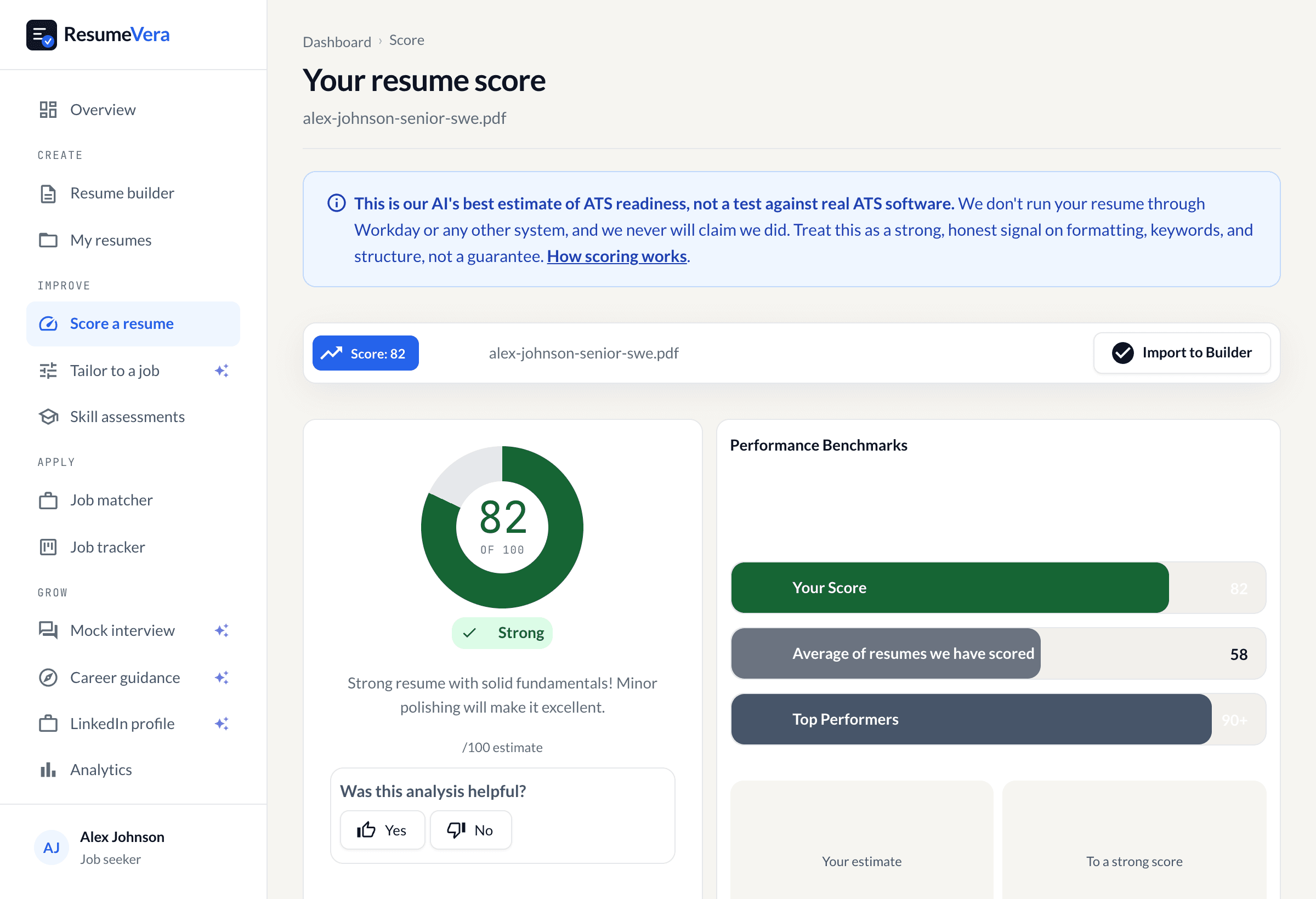
A sample resume in the real checker. The 82 and the sub-scores are what the scorer returns for it.
Now check it against your own resume
An honest, AI-estimated ATS score in 30 seconds. No account, no card.