Cybersecurity Analyst Resume Examples 2026: SOC, SIEM & ATS Keywords
Cybersecurity resumes are often packed with certifications and tool names but still fail to show security judgment. Recruiters do not just want someone who has heard of SIEM, EDR, or vulnerability scans. They want evidence that you can monitor, investigate, document, escalate, and reduce risk.
This guide shows you how to write a cybersecurity analyst resume in 2026 that reflects real security work rather than buzzword collection.
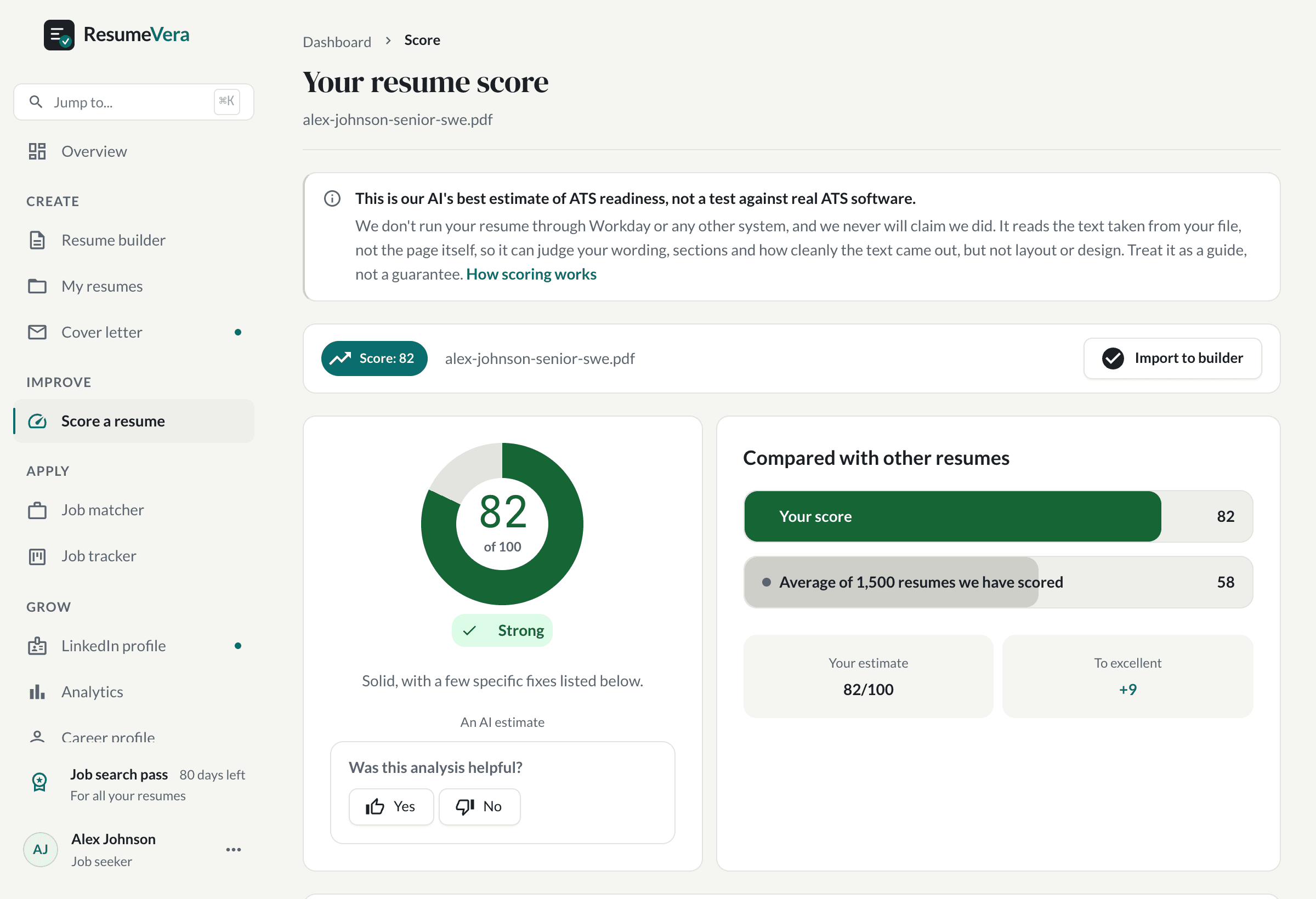
Security resumes need precision. Run yours through ResumeVera to catch vague bullet points and weak keyword coverage before you apply.
Direct Answer: What should a cybersecurity analyst resume include in 2026?
A cybersecurity analyst resume should include a role-specific summary, exact tool and domain keywords, and bullet points showing monitoring, incident handling, log analysis, vulnerability work, or compliance support. The best resumes explain what security systems you worked with, what kind of alerts or risks you handled, and what outcome or reduction in risk came from that work.
Core ATS Keywords
- SOC, SIEM, EDR, XDR, phishing analysis, threat detection
- Splunk, Microsoft Sentinel, QRadar, CrowdStrike, Defender
- Incident response, log analysis, IAM, vulnerability assessment, patch management
- NIST, ISO 27001, compliance, risk assessment, alert triage
Summary Examples
Entry-Level Example
Cybersecurity-focused computer science graduate with lab and project exposure in log analysis, vulnerability assessment, and phishing simulation. Familiar with SIEM workflows, network basics, Linux, and security documentation. Seeking SOC analyst or junior cybersecurity role.
Experienced Example
Cybersecurity Analyst with 4 years of SOC and vulnerability-management experience, handling SIEM alert triage, incident documentation, phishing investigations, and IAM review support. Reduced false-positive escalation load by 23 percent through rule tuning and improved incident response documentation quality across the security operations workflow.
Strong Bullet Examples
- Monitored and triaged 150 plus daily security alerts using SIEM workflows, escalating high-confidence incidents according to defined severity playbooks.
- Performed phishing-email analysis and user-impact review, reducing repeat user-report triage time by 28 percent through templated classification and response notes.
- Supported vulnerability-assessment cycles across endpoint and server environments, tracking remediation status and improving closure compliance from 74 percent to 91 percent.
- Documented incident timelines, affected assets, and corrective actions for internal review and audit-readiness processes.
Entry-Level Projects That Help
- SIEM-style log analysis dashboard using sample datasets
- Phishing simulation and awareness reporting project
- Vulnerability scan and remediation prioritisation lab
- Basic SOC runbook or incident-playbook creation project
Common Mistakes
- Listing security tools with no context
- Claiming incident-response experience without examples
- Overusing certification names without proof of applied work
- Ignoring documentation, escalation, and process discipline
- Using ethical hacker language for roles that are actually analyst roles
Frequently Asked Questions: Cybersecurity Analyst Resume 2026
What should be on a cybersecurity analyst resume?
A cybersecurity analyst resume should include security tools, alert-handling or vulnerability workflow evidence, incident or monitoring examples, and the exact systems or processes you supported.
Which keywords matter most for cybersecurity analyst roles?
Common keywords include SOC, SIEM, incident response, Splunk, Microsoft Sentinel, vulnerability assessment, IAM, EDR, phishing analysis, and compliance support.
Can new grads get cybersecurity analyst roles through projects?
Yes. Security labs, log-analysis projects, phishing simulations, and vulnerability-management projects can help new grads show relevant thinking when professional experience is limited.
Should cybersecurity resumes mention certifications?
Yes, but only as support. Certifications help, but resumes still need project or work evidence showing how tools and frameworks were actually used.
Is SIEM experience important on a cybersecurity resume?
Yes. SIEM workflows are one of the clearest indicators of SOC and monitoring readiness, especially for analyst roles.
Incident-Centered Resume Writing Model
Cybersecurity resumes become credible when they describe incident reality. Recruiters need to see detection, triage, response, and documentation discipline. Use incident-centered bullets to show operational maturity.
- Signal: alert type, telemetry source, or threat context.
- Action: triage, investigation steps, enrichment, containment, escalation.
- Control: framework alignment, runbook use, or process hardening.
- Outcome: reduced risk exposure, faster containment, cleaner audits, fewer repeats.
Before vs After: Security Bullet Rewrites
Weak
Monitored SIEM alerts and handled incidents.
Strong
Triaged SIEM alerts across authentication and endpoint activity, enriched findings with threat intelligence and log context, and escalated high-confidence incidents with structured evidence packages.
Weak
Performed vulnerability scans regularly.
Strong
Executed recurring vulnerability assessments, prioritised remediation by exploitability and asset criticality, and tracked closure status with IT owners to improve patch compliance discipline.
Tool and Framework Mapping
- SOC monitoring: Splunk, Sentinel, QRadar, alert triage, playbook execution.
- Endpoint and identity: EDR telemetry, IAM review, privilege misuse detection.
- Governance and compliance: NIST CSF, ISO 27001 controls, evidence-ready documentation.
- Threat operations: phishing analysis, IOC handling, containment handoff, post-incident review.
Entry-Level Project Ideas That Actually Help
- Build a small SOC simulation workflow with sample logs and triage notes.
- Create a vulnerability prioritisation tracker with remediation rationale.
- Document a phishing detection lab with indicators and response steps.
- Map one lab project to NIST functions to show framework awareness.
SOC Interview Prep Prompts From Your Resume
Recruiters often use your resume bullets as interview prompts. If your resume claims SIEM, triage, or incident response exposure, be ready to explain concrete workflows. This section helps you convert resume claims into defensible interview narratives.
Prompt 1: Walk me through an alert you investigated
Use a short structure: detection source, why alert looked suspicious, enrichment steps, escalation decision, and final outcome. Mention how you reduced noise or improved confidence before escalation.
Prompt 2: How do you prioritize vulnerabilities?
Explain prioritization logic using business context, exploitability, and asset criticality. Strong answers show that patching decisions are risk-driven, not just scanner-score driven.
Prompt 3: What evidence did you document?
Show documentation discipline: timeline, indicators, affected scope, containment actions, and lessons learned. Good documentation indicates real analyst maturity and supports audit readiness.
Security Resume Red Flags to Remove
- Overloaded tool lists with no operational context.
- Claims of incident response ownership without any example workflow.
- Certification-heavy resumes with weak project or case evidence.
- Vague phrases like "improved security posture" without specifics.
- No mention of collaboration with IT, DevOps, or compliance teams.
One-Hour Upgrade Sprint
- Replace two generic bullets with incident-centered bullets.
- Add one vulnerability-remediation bullet with risk rationale.
- Insert one framework-linked bullet (NIST or ISO context).
- Make tool mentions evidence-backed, not keyword-only.
- Read all bullets aloud and remove any claim you cannot defend.