Singapore resume format 2026: the complete guide
A Singapore resume blends Western conciseness with a few local essentials. This guide covers the details that matter in Singapore: your work-pass or citizenship status, the TAFEP fair-employment rules on photos and personal data, why your NRIC never belongs on a resume, and how to get through MyCareersFuture and multinational applicant tracking systems.
A Singapore resume, top to bottom
- 1
Contact and work-pass status
Name, phone, email, and your right to work: citizen, PR, EP, S Pass or requires sponsorship.
- 2
Professional summary
Two or three lines aimed at the role.
- 3
Work experience
Reverse chronological, with quantified achievements.
- 4
Education
Degree, institution, year.
- 5
Skills
Certifications, languages and projects are useful optional additions.
Leave out
What is the standard Singapore resume format in 2026?
The standard Singapore resume is a 1–2 page, reverse-chronological document written in English. It leads with quantified achievements, and it includes one detail most Western resumes omit: your work-eligibility status. It leaves off the personal data that fair-employment guidelines tell employers to ignore, and it is formatted to pass both MyCareersFuture and the applicant tracking systems used by multinational employers.
Singapore sits at a crossroads of hiring cultures. American and British conventions dominate among the multinationals that make up much of the market, so conciseness, quantified impact, and ATS-friendly formatting are expected. At the same time, local practices and Singapore-specific rules — work passes, the Fair Consideration Framework, and the Tripartite Guidelines on Fair Employment Practices (TAFEP) — shape what you should and should not include.
Use a single-column layout, standard section headings ("Work Experience", "Education", "Skills"), and save as .pdf for direct applications or .docx when a portal requests it. Keep the design clean: no tables within tables, no text boxes, and no graphics that an ATS cannot read.
Reverse Chronological
Most recent role first. The default for nearly all Singapore industry roles and the easiest format for recruiters and ATS to read.
State Your Status
Add a short line near your contact details — Singapore Citizen, PR, or Employment Pass holder. Employers screen for eligibility early, so this saves everyone time.
Fair-Employment Aligned
No NRIC, age, race, religion, gender, or marital status. TAFEP guidelines direct employers to ignore these, so leaving them off is both safe and expected.
Photos, NRIC, and personal particulars under TAFEP
Singapore does not have a US-style anti-discrimination statute governing resumes, but it does have the Tripartite Guidelines on Fair Employment Practices (TAFEP), and the Ministry of Manpower (MOM) can act against employers who breach them. The practical effect is the same: leave sensitive personal data off your resume.
TAFEP asks employers to select on merit and to remove application fields covering age, gender, race, religion, marital status and family responsibilities, disability, photographs, and national service liability. Because employers are being told not to consider these factors, volunteering them on your resume adds nothing and can work against you.
Your NRIC or FIN number is a special case: it should never appear on a resume. It reveals your age, it is valuable to identity thieves, and TAFEP guidance says employers should only request it at the point of a job offer. Photos, once routine, are now best omitted — especially for multinationals — unless a listing specifically asks for one, as in some customer-facing or aviation roles.
Check yours
You do not have to guess whether yours follows this
Paste yours in and the checker reads it the way an ATS would. It will tell you whether your dates parse, whether your sections are found, and what is missing from each one.
Check your resume free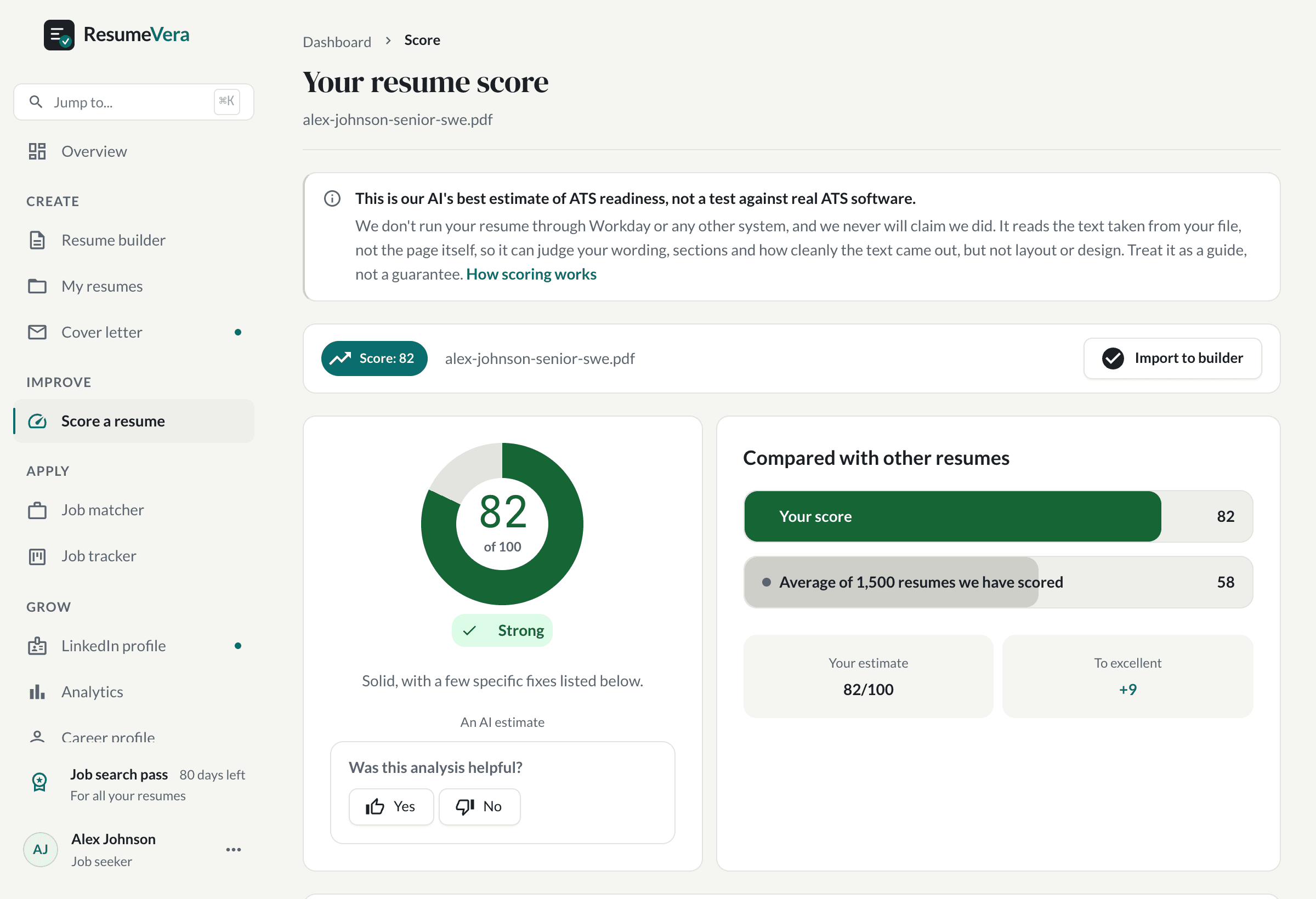
The real score page, with a sample resume and sample scores.
How to show your work-eligibility status
Stating whether you can legally work in Singapore — and under what pass — is the single most important Singapore-specific addition to your resume. Under the Fair Consideration Framework, employers must advertise most roles on MyCareersFuture and fairly consider local candidates before hiring Employment Pass holders, so your status directly affects how your application is handled.
Add a short, factual line near your contact details. Do not include your NRIC or FIN number — the status alone is enough at the application stage.
| Your Situation | What to Write |
|---|---|
| Singapore Citizen | "Singapore Citizen" — no work pass required |
| Permanent Resident | "Singapore Permanent Resident (PR)" |
| On an Employment Pass / S Pass | "Employment Pass holder" (optionally note if transferable) |
| Needs sponsorship | State this plainly, e.g. "Requires Employment Pass sponsorship" |
| Dependant/LTVP with work eligibility | Note eligibility to work without a separate pass, where applicable |
What sections should a Singapore resume include?
A Singapore resume needs contact information with work-pass status, a short professional summary, work experience with quantified achievements, education, and relevant skills. Certifications, languages, and projects are useful optional sections. Sensitive personal data should never appear.
| Include | Optional | Never Include |
|---|---|---|
| Contact info + work-pass status | Certifications | NRIC / FIN number |
| Professional summary | Languages | Date of birth / age |
| Work experience (with metrics) | Projects / portfolio | Race / religion |
| Education | Volunteer work | Marital status / gender |
| Skills | Professional memberships | Photo (unless requested) |
MyCareersFuture, job portals, and ATS in Singapore
MyCareersFuture, run by Workforce Singapore, is the government job portal at the centre of the Fair Consideration Framework: employers must advertise most roles there and fairly consider local candidates before applying for an Employment Pass. JobStreet, LinkedIn, Indeed, and company career sites round out where Singapore roles are posted.
Multinational employers typically screen resumes through applicant tracking systems such as Workday, Greenhouse, and SAP SuccessFactors before a human reads them. To pass cleanly, keep a single-column layout, use standard section headings, mirror keywords from the job description, avoid headers and footers, and submit .pdf or .docx rather than image-based files.
How a Singapore resume differs from US and UAE formats
Singapore borrows the concise, achievement-led style of a US resume but keeps a few regional essentials. The clearest contrasts are around work-pass status, photos, and personal data.
| Feature | Singapore | United States | United Arab Emirates |
|---|---|---|---|
| Length | 1–2 pages | 1–2 pages | 1–2 pages |
| Photo | Optional; best omitted | Never | Common / expected |
| Work-pass / visa status | Include (important) | Omit | Include (visa status matters) |
| Age / DOB, race, religion | Never | Never | Sometimes included |
| National ID number | Never (NRIC only at offer) | Never (no SSN) | Emirates ID not on CV |
| Language | English | English | English (Arabic a plus) |
Templates
Start from one that already follows these rules
Single column, real text, standard headings, and no text boxes or tables for a parser to trip over. Every one renders your own content before you commit to it.
Browse the templates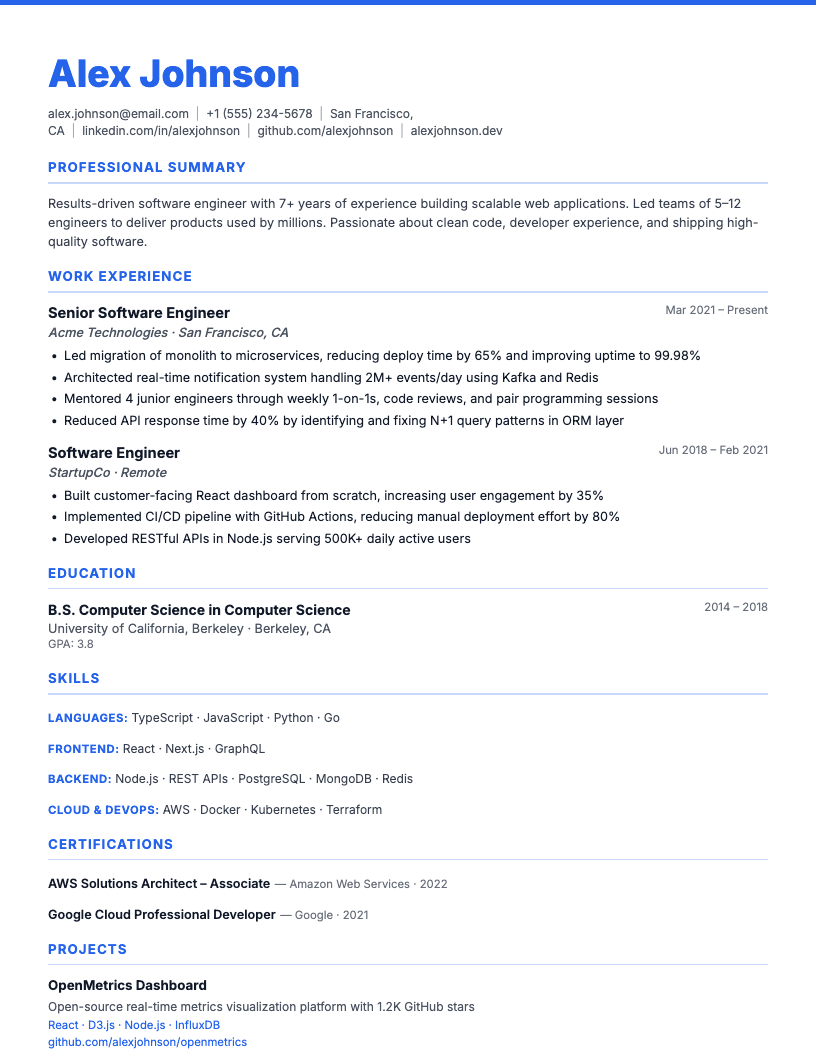
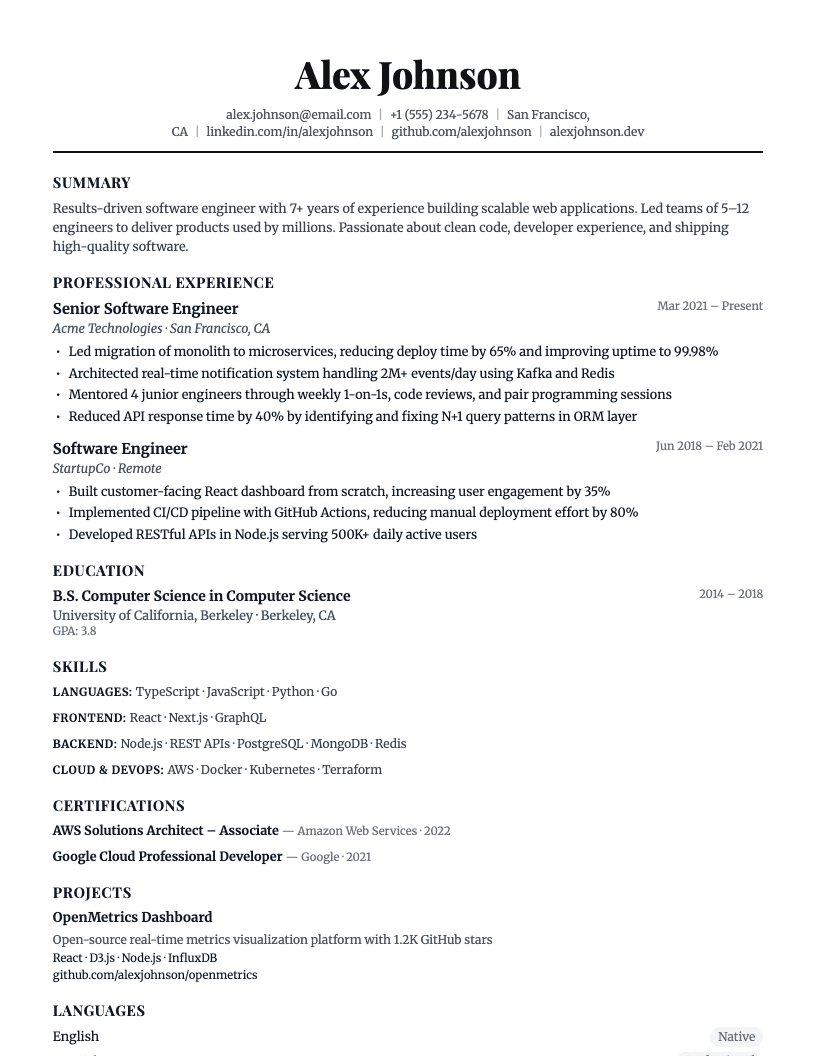
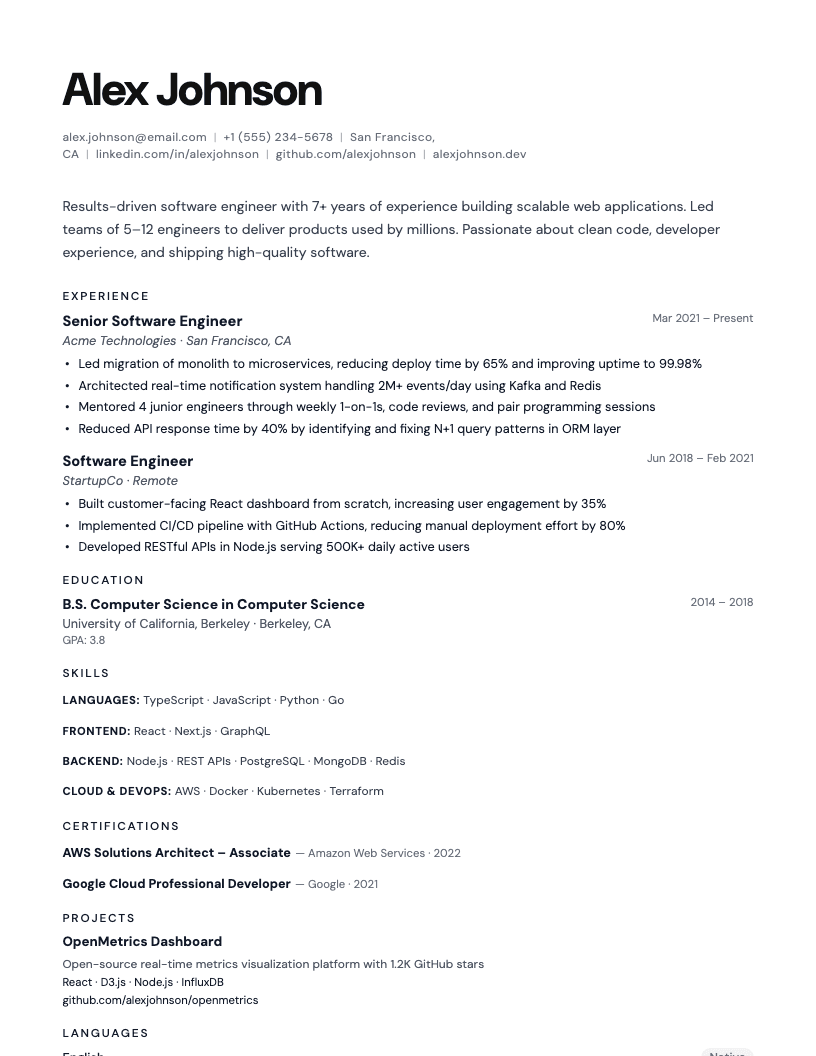
What thirteen points of difference looks like
These are the two sample resumes our own scorer rates 54 and 82. Nothing was rewritten to sound better; the second one is the first one with its structure fixed.
82
of 100
- Two-line summary naming the role
- Every role dated, month and year
- Skills as a comma-separated list
- Four bullets in nine carry a number
Drag to compare. Same person, same jobs, same words for the most part, the difference is structure.
Questions
Frequently asked questions about the Singapore resume format
Answers to the most common questions about formatting a resume for the Singapore job market.
Sources & further reading
The formatting guidance and figures on this page draw on the following authoritative sources.
- TAFEP, Tripartite Guidelines on Fair Employment Practices, basis for omitting age, race, religion, photo, and NRIC
- TAFEP, Fair job application forms, guidance that NRIC/photo be requested only at job offer
- MyCareersFuture (Workforce Singapore), the government job portal and Fair Consideration Framework
- Ministry of Manpower, Fair Consideration Framework, local-advertising rules that make work-pass status relevant
Resume and CV formats by country
Applying abroad? Resume conventions differ by market. Explore the correct format for where you are applying.
Build a Singapore-ready resume
Use ResumeVera to create an ATS-optimized resume that follows Singapore conventions, work-pass status included, sensitive data left off. Get instant feedback on structure, keywords, and readability.
ATS-Optimized
Singapore Conventions
AI-Powered Feedback