Salary Hike Calculator India: See Your Real Net Gain
A 30% CTC hike isn't 30% more money. Enter your current and new salary to see your actual monthly take-home improvement after income tax, EPF, and professional tax.
Current Annual CTC (₹)
₹
New Salary, Enter As
Hike Percentage (%)
%
New CTC: ₹13,00,000
Tax Regime (FY 2026-27)
State (Professional Tax)
Great move financially · 31.4% real net gain
Monthly Take-Home
Current
₹78,130
New
₹1,02,649
+₹24,519/month · +₹2,94,228/year
CTC
₹10,00,000 → ₹13,00,000
+30.0% gross hike
Income Tax
₹0/yr → ₹0/yr
+₹0/yr in extra tax
Effective Tax Rate
0.0% → 0.0%
Real Net Take-Home Gain
+₹2,94,228/yr
31.4% real gain vs 30.0% CTC hike
Planning to switch? Make sure your resume lands interviews first.
Build My Resume, Free →What this assumes
- Basic salary is taken as 40% of CTC for both the old and the new figure
- EPF is calculated on the ₹15,000 statutory ceiling
- Metro HRA rates are used, with no rent entered, so no HRA exemption is applied
- No 80C or 80D deductions are included on either side of the comparison
Both sides use the same assumptions, so the percentage change is more reliable than either absolute figure.
Why a CTC hike percentage does not tell the whole story
The number your HR quotes and the number your bank sees are different. Here's why.
Tax erodes CTC hike by 5–12%
Every extra rupee earned above your current bracket is taxed at a higher marginal rate. A 30% CTC hike typically yields only 20–25% more take-home after tax, especially once you cross the ₹12L zero-tax threshold.
Net gain is the only number that matters
Two offers with the same CTC hike % can have very different real gains depending on salary structure, PT state, and whether you move into a new tax slab. Always compare net take-home improvement.
Negotiate with tax awareness
If you're close to a slab boundary (₹12L, ₹16L, ₹20L taxable), ask your new employer to restructure salary into tax-exempt components (NPS 80CCD(2), LTA) to maximize take-home on the same CTC.
Example: 40% hike, but only 27% more take-home
Moving from ₹12L CTC to ₹16.8L CTC (+40%) under new regime FY 2026-27: Current take-home ≈ ₹89,000/month (zero tax). New take-home ≈ ₹1,12,000/month (₹47,000 tax/year). Net gain: ₹23,000/month, real hike ≈ 25.8%. The extra ₹4.8L CTC generates ₹47,000 in new tax because you cross the ₹12L threshold where income tax kicks in.
New regime tax slabs, FY 2026-27
Know your slab before negotiating your salary.
Up to ₹12L taxable
Zero tax (87A rebate)
₹12L – ₹16L
15% on amount above ₹12L
₹16L – ₹20L
20% on amount above ₹16L
₹20L – ₹24L
25% on amount above ₹20L
Above ₹24L
30% on amount above ₹24L
+ 4% Health & Education Cess on total tax · Surcharge above ₹50L
Hike benchmarks by industry (India, 2025)
IT / Software
25–50%
Consulting
20–40%
Banking / Finance
20–35%
E-commerce / Startups
30–60%
Manufacturing / Core
15–25%
Healthcare
20–35%
Questions
Frequently asked questions
Everything about salary hikes and tax in India.
Before the next offer
A bigger jump usually comes from a better-aimed resume
Tailoring rewrites your bullets in the language of the posting and re-scores the result. It never adds a skill you have not claimed.
Check your resume free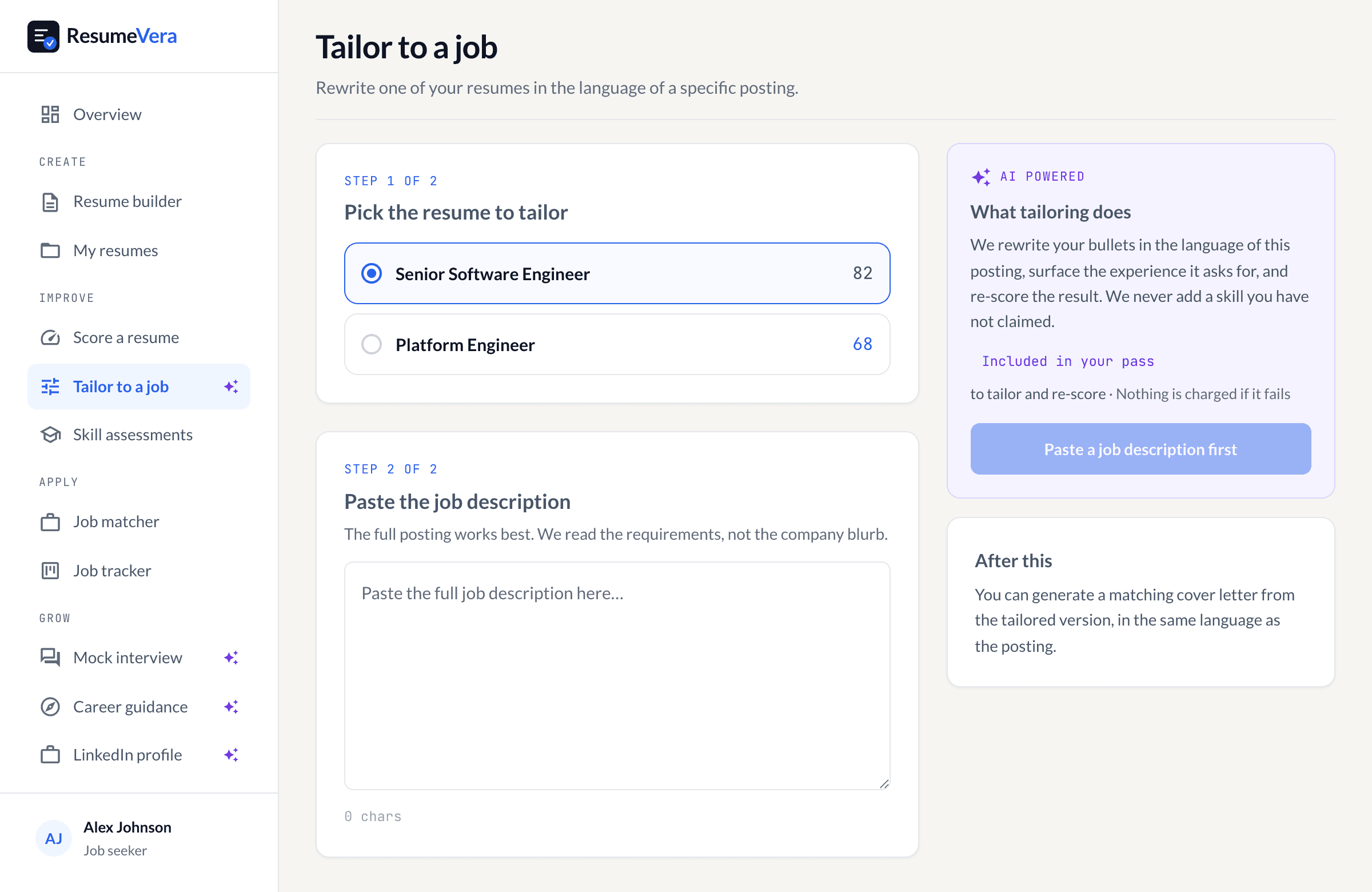
The real screen. It rewrites your bullets in the language of the posting and never adds a skill you have not claimed.
Ready to switch? Build an ATS-ready resume first.
Most companies use ATS to filter resumes. Build one that gets through, with AI guidance and a live score. Free to start.