CTC vs in-hand salary in India 2026: what's the difference and how to calculate both
Career Advice · ResumeVera Editorial · June 10, 2026 · 12 min read

Last updated: October 2026 · 12 min read · By ResumeVera Team
What you'll learn:
- The exact difference between CTC, gross salary, and in-hand pay
- Every deduction that reduces your CTC to in-hand: EPF, TDS, professional tax
- Real CTC-to-in-hand examples at ₹5L, ₹10L, ₹20L, and ₹30L annual CTC
- A CTC to in-hand chart from ₹3 LPA to ₹30 LPA
- FY 2026-27 new regime: effective zero-tax limit of ₹12.75L for salaried
- Why the gap grows at higher income levels
- How to reverse-engineer your required CTC from desired take-home
"CTC" appears on every Indian offer letter. "In-hand" is what you actually live on. The two numbers are almost never the same, and the gap between them is where many salary negotiations go wrong.
This guide explains every component of CTC, every deduction that reduces it to in-hand pay, and gives you worked examples at four salary levels so you know exactly what any offer is actually worth.
Calculate your exact in-hand salary
Enter your annual CTC in the Take-Home Salary Calculator and get a full breakup (monthly in-hand, tax, EPF, and all deductions) under both regimes.
CTC to in-hand salary chart 2026 (₹3 LPA to ₹30 LPA)
Monthly in-hand for common CTCs under the new tax regime, FY 2026-27. The assumptions are the same as the worked examples further down: basic at 50% of CTC, EPF at 12% of basic up to the ₹25,000 monthly wage ceiling, gratuity accrual of 4.81% of basic inside CTC, and professional tax of ₹2,500 a year. For your own state, regime and HRA, use the take-home salary calculator.
| Annual CTC | Monthly CTC | Monthly in-hand | Monthly income tax (TDS) | In-hand as % of CTC |
|---|---|---|---|---|
| ₹3 LPA | ₹25,000 | ₹21,190 | ₹0 | 85% |
| ₹4 LPA | ₹33,333 | ₹28,323 | ₹0 | 85% |
| ₹5 LPA | ₹41,667 | ₹35,456 | ₹0 | 85% |
| ₹6 LPA | ₹50,000 | ₹42,589 | ₹0 | 85% |
| ₹7 LPA | ₹58,333 | ₹50,722 | ₹0 | 87% |
| ₹8 LPA | ₹66,667 | ₹58,855 | ₹0 | 88% |
| ₹9 LPA | ₹75,000 | ₹66,988 | ₹0 | 89% |
| ₹10 LPA | ₹83,333 | ₹75,121 | ₹0 | 90% |
| ₹12 LPA | ₹1,00,000 | ₹91,387 | ₹0 | 91% |
| ₹15 LPA | ₹1,25,000 | ₹1,08,597 | ₹7,188 | 87% |
| ₹18 LPA | ₹1,50,000 | ₹1,28,992 | ₹11,192 | 86% |
| ₹20 LPA | ₹1,66,667 | ₹1,41,874 | ₹14,576 | 85% |
| ₹25 LPA | ₹2,08,333 | ₹1,72,656 | ₹24,459 | 83% |
| ₹30 LPA | ₹2,50,000 | ₹2,00,941 | ₹36,838 | 80% |
Up to ₹12 LPA in this chart, income tax is zero, because taxable income stays within the ₹12 lakh rebate limit. Below about ₹6 LPA, basic is under the ₹25,000 ceiling, so EPF is taken on your full basic and in-hand sits at about 85% of CTC. From ₹15 LPA the share you keep falls again, as more of each extra rupee is taxed at 15% and above.
The three salary terms you need to know
1. CTC (cost to company)
CTC is the total annual cost that your employer incurs to employ you. It includes everything: your salary, allowances, bonuses, employer's share of Provident Fund, gratuity accrual, and non-cash benefits like health insurance.
CTC = Fixed Pay + Variable Pay + Employer EPF + Employer ESIC (if applicable) + Gratuity Accrual + Benefits
Critical point: CTC includes money the employer pays that you never directly receive, like the employer's 12% EPF contribution, which goes into your PF account, not your bank. And gratuity, which is generally paid only after at least five years of continuous service, or one year for fixed-term employees, under the Code on Social Security, 2020, in force since 21 November 2025 (section 53, Code on Social Security, 2020; PIB factsheet, 22 November 2025). Companies include these in CTC, which inflates the headline number relative to what you actually receive.
2. Gross salary
Gross salary is your total earnings from the employer before deductions; it excludes employer contributions but includes all allowances. This is the number on which TDS (income tax) and EPF (employee contribution) are calculated.
Gross Salary = Basic + HRA + Special Allowance + LTA + Other Allowances
3. In-hand (net) salary
In-hand salary (also called take-home or net salary) is what arrives in your bank account after all deductions:
In-Hand = Gross Salary − Employee EPF − Professional Tax − TDS (Income Tax)
CTC components explained
Fixed components
Basic Salary: The core component. How much of your CTC is basic varies by employer. Under the Labour Codes in force since 21 November 2025, if pay-outs such as HRA, bonus, conveyance allowance or commission add up to more than 50% of your total remuneration, the excess is added back to wages, which raises the base for benefits such as gratuity (PIB factsheet, 22 November 2025). Basic is fully taxable. EPF, HRA, and gratuity calculations are based on basic salary. A higher basic means more EPF deduction and more gratuity accrual, which reduces monthly in-hand but builds long-term savings.
House Rent Allowance (HRA): An allowance towards your rent. HRA is partially or fully tax-exempt under Schedule III (item 11) of the Income-tax Act, 2025 (section 10(13A) under the 1961 Act) if you live in a rented house. Under the new tax regime, HRA exemption is not available: HRA is fully taxable.
Special Allowance: The balancing component: whatever's left after structuring Basic, HRA, and other allowances to equal the target CTC. Special allowance is fully taxable under both regimes.
Leave Travel Allowance (LTA): Exempt from tax for actual travel expenses for domestic journeys twice in a 4-year block, under Schedule III (item 8) of the Income-tax Act, 2025 (section 10(5) under the 1961 Act). Not available under the new tax regime.
Meal / Food Allowance: From 1 April 2026, free food and non-alcoholic beverages from your employer, served at the workplace during working hours or given through paid vouchers usable only at eating places, are not taxed up to ₹200 per meal. This is rule 15(5)(a), Table IV, item 3 of the Income-tax Rules, 2026, read with section 17(1)(e) of the Income-tax Act, 2025 (rule 3(7)(iii) of the Income-tax Rules, 1962, read with section 17(2)(viii) of the 1961 Act, where the limit was ₹50). Because it is a rule for valuing perquisites, not a deduction, it applies under the new tax regime too. Reference: Income-tax Rules, 2026 (Notification No. 22/2026, Income Tax Department)
Variable components
Performance Bonus / Variable Pay: Tied to individual and company performance. Quoted as a percentage of CTC ("20% variable") or as a fixed amount. Fully taxable. Variable pay may not be paid if performance targets are missed; it is not guaranteed.
Joining Bonus: One-time payment on joining, often subject to a clawback clause (must be returned if you leave within a set period, which your offer letter states). Fully taxable as salary income in the year of receipt.
Employer contributions (in CTC but not in-hand)
Employer EPF Contribution: 12% of basic salary (up to the ₹25,000 statutory wage ceiling). If your basic is ₹50,000, the mandatory EPF contribution is capped at 12% of ₹25,000 = ₹3,000/month, not 12% of ₹50,000. If your basic is below ₹25,000, the 12% applies to your full basic. However, many companies contribute 12% of actual basic as a voluntary excess. This goes to your PF account, not your bank. Reference: EPF scheme: 12% contribution rate (EPFO)
Gratuity Accrual: Companies accrue approximately 4.81% of your basic salary per year as gratuity expense. This is included in CTC, but gratuity is generally paid only after at least five years of continuous service; fixed-term employees qualify after one year, on a pro rata basis (section 53, Code on Social Security, 2020; PIB factsheet, 22 November 2025). If you leave before you qualify, this accrual stays with the employer.
Health Insurance & Group Medical Cover: Employer-provided insurance premiums are included in CTC. This coverage ends the day you leave the company. The cost is real but you receive it as a service, not cash.
What gets deducted to arrive at in-hand
1. Employee EPF (12% of basic, up to ₹25,000 ceiling)
Your employee contribution to EPF is deducted before you receive your salary. At the ₹25,000 statutory wage ceiling: ₹3,000/month max mandatory deduction (12% of ₹25,000). If your basic is below ₹25,000 a month, the deduction is 12% of your actual basic. If your employer chooses to contribute above the ceiling (say 12% of actual basic ₹50,000 = ₹6,000/month), your employee share also rises to ₹6,000/month; check your salary slip. This accumulates in your EPF account and earns interest: 8.25% a year for 2025-26, the rate the EPFO Central Board of Trustees recommended on 2 March 2026 (PIB release, 2 March 2026) and the government notified in July 2026 (All India Radio, 1 July 2026).
Updated 7 October 2026 for the ₹25,000 EPF wage ceiling in force from 17 September 2026, up from ₹15,000 (Ministry of Labour and Employment release, 16 September 2026). All worked examples below use the new ceiling. The Ministry said EPFO would carry out the statutory and administrative steps to implement it, so confirm the figure on your payslip.
2. TDS (income tax deducted at source)
Your employer deducts TDS from your monthly salary based on your projected annual income and submitted investment declarations. Under the new tax regime FY 2026-27:
- Standard deduction: ₹75,000
- Tax-free income: up to ₹4,00,000
- Rebate under section 156 of the Income-tax Act, 2025 (section 87A under the 1961 Act): up to ₹60,000 for taxable income ≤ ₹12,00,000
- Effective zero-tax limit for salaried employees: ₹12,75,000 gross salary
- Slab rates: nil up to ₹4L, 5% from ₹4L to ₹8L, 10% from ₹8L to ₹12L, 15% from ₹12L to ₹16L, 20% from ₹16L to ₹20L, 25% from ₹20L to ₹24L, 30% above ₹24L, plus 4% health and education cess
- Employee EPF (section 123 of the Income-tax Act, 2025; section 80C under the 1961 Act) and professional tax are not deductible under the new regime
References: Income Tax Department: Salaried Individuals AY 2026-27; Finance Bill 2026 memorandum: rates for tax year 2026-27 unchanged; Income-tax Act, 2025 as amended by the Finance Act, 2026
3. Professional tax
Professional tax is levied by state governments on salaried employees. The maximum under current law is ₹2,500 per year. It is deducted monthly from salary. States like Maharashtra, Karnataka, West Bengal, Tamil Nadu, Andhra Pradesh, and Telangana levy professional tax. States like Delhi, Haryana, Rajasthan, and UP do not.
CTC to in-hand: real examples at 4 salary levels (new regime, FY 2026-27)
Assumptions used in all four examples: basic salary is 50% of CTC; employer and employee EPF are each 12% of basic, capped at the ₹25,000 monthly wage ceiling (so at most ₹3,000 a month each); gratuity accrual is 4.81% of basic; professional tax is ₹2,500 a year (your state may levy less or none); new tax regime with the ₹75,000 standard deduction and 4% cess. Taxable income is gross salary minus ₹75,000, because employee EPF and professional tax are not deductible under the new regime. Monthly figures are annual figures divided by 12 and rounded.
₹5 lakh annual CTC
| Component | Annual | Monthly |
|---|---|---|
| Gross CTC | ₹5,00,000 | ₹41,667 |
| Basic salary (50% of CTC) | ₹2,50,000 | ₹20,833 |
| Less: Employer EPF (12% of basic) | ₹30,000 | ₹2,500 |
| Less: Gratuity accrual (4.81% of basic) | ₹12,025 | ₹1,002 |
| Gross salary | ₹4,57,975 | ₹38,165 |
| Less: Employee EPF (12% of basic) | ₹30,000 | ₹2,500 |
| Less: Professional tax | ₹2,500 | ₹208 |
| Taxable income (gross salary minus ₹75,000) | ₹3,82,975 | - |
| Less: TDS (income tax) | ₹0 | ₹0 |
| In-hand | ₹4,25,475 | ~₹35,456 |
Basic is ₹20,833 a month, below the ₹25,000 ceiling, so EPF is 12% of the full basic: ₹2,500 a month from you and ₹2,500 from your employer. Under the earlier ₹15,000 ceiling the mandatory figure was ₹1,800, so in-hand is about ₹700 a month lower than it was, and ₹1,400 a month more goes into your PF account. Tax is zero because taxable income of ₹3,82,975 is under ₹4L. In-hand: ₹4,57,975 − ₹30,000 − ₹2,500 = ₹4,25,475, about 93% of gross salary and 85% of CTC.
₹10 lakh annual CTC
| Component | Annual | Monthly |
|---|---|---|
| Gross CTC | ₹10,00,000 | ₹83,333 |
| Basic salary (50% of CTC) | ₹5,00,000 | ₹41,667 |
| Less: Employer EPF (12% of ₹25,000 ceiling) | ₹36,000 | ₹3,000 |
| Less: Gratuity accrual (4.81% of basic) | ₹24,050 | ₹2,004 |
| Gross salary | ₹9,39,950 | ₹78,329 |
| Less: Employee EPF (12% of ₹25,000 ceiling) | ₹36,000 | ₹3,000 |
| Less: Professional tax | ₹2,500 | ₹208 |
| Taxable income (gross salary minus ₹75,000) | ₹8,64,950 | - |
| Less: TDS (income within ₹12L rebate zone) | ₹0 | ₹0 |
| In-hand | ₹9,01,450 | ~₹75,121 |
Basic is ₹41,667 a month, above the ceiling, so mandatory EPF is 12% of ₹25,000 = ₹3,000 a month each from you and your employer (₹1,800 under the earlier ceiling). Taxable income of ₹8,64,950 is under ₹12L, so the section 156 rebate brings tax to zero. In-hand: ₹9,39,950 − ₹36,000 − ₹2,500 = ₹9,01,450, about 96% of gross salary and 90% of CTC.
₹20 lakh annual CTC
| Component | Annual | Monthly |
|---|---|---|
| Gross CTC | ₹20,00,000 | ₹1,66,667 |
| Basic salary (50% of CTC) | ₹10,00,000 | ₹83,333 |
| Less: Employer EPF (12% of ₹25,000 ceiling) | ₹36,000 | ₹3,000 |
| Less: Gratuity accrual (4.81% of basic) | ₹48,100 | ₹4,008 |
| Gross salary | ₹19,15,900 | ₹1,59,658 |
| Less: Employee EPF (12% of ₹25,000 ceiling) | ₹36,000 | ₹3,000 |
| Less: Professional tax | ₹2,500 | ₹208 |
| Taxable income (gross salary minus ₹75,000) | ₹18,40,900 | - |
| Less: TDS (new regime, incl. 4% cess) | ₹1,74,907 | ₹14,576 |
| In-hand | ₹17,02,493 | ~₹1,41,874 |
Tax on ₹18,40,900: ₹20,000 (5% of ₹4L to ₹8L) + ₹40,000 (10% of ₹8L to ₹12L) + ₹60,000 (15% of ₹12L to ₹16L) + ₹48,180 (20% of ₹2,40,900) = ₹1,68,180, plus 4% cess of ₹6,727 = ₹1,74,907. In-hand: ₹19,15,900 − ₹36,000 − ₹2,500 − ₹1,74,907 = ₹17,02,493, about 89% of gross salary and 85% of CTC. Tax becomes significant at this level.
₹30 lakh annual CTC
| Component | Annual | Monthly |
|---|---|---|
| Gross CTC | ₹30,00,000 | ₹2,50,000 |
| Basic salary (50% of CTC) | ₹15,00,000 | ₹1,25,000 |
| Less: Employer EPF (12% of ₹25,000 ceiling) | ₹36,000 | ₹3,000 |
| Less: Gratuity accrual (4.81% of basic) | ₹72,150 | ₹6,013 |
| Gross salary | ₹28,91,850 | ₹2,40,988 |
| Less: Employee EPF (12% of ₹25,000 ceiling) | ₹36,000 | ₹3,000 |
| Less: Professional tax | ₹2,500 | ₹208 |
| Taxable income (gross salary minus ₹75,000) | ₹28,16,850 | - |
| Less: TDS (new regime, incl. 4% cess; no surcharge below ₹50L) | ₹4,42,057 | ₹36,838 |
| In-hand | ₹24,11,293 | ~₹2,00,941 |
Tax on ₹28,16,850: ₹3,00,000 on the first ₹24L (₹20,000 + ₹40,000 + ₹60,000 + ₹80,000 + ₹1,00,000) + ₹1,25,055 (30% of ₹4,16,850) = ₹4,25,055, plus 4% cess of ₹17,002 = ₹4,42,057. In-hand: ₹28,91,850 − ₹36,000 − ₹2,500 − ₹4,42,057 = ₹24,11,293, about 83% of gross salary and 80% of CTC. At ₹30L CTC, you keep roughly 4 out of every 5 rupees of CTC.
The gap summary
| Annual CTC | Monthly in-hand | In-hand as % of gross salary | In-hand as % of CTC |
|---|---|---|---|
| ₹5 lakh | ~₹35,456 | ~93% | ~85% |
| ₹10 lakh | ~₹75,121 | ~96% | ~90%* |
| ₹20 lakh | ~₹1,41,874 | ~89% | ~85% |
| ₹30 lakh | ~₹2,00,941 | ~83% | ~80% |
*At ₹10L, no income tax applies due to the section 156 rebate, and the ₹25,000 ceiling caps EPF at ₹3,000 a month, so in-hand is a higher share of CTC than at ₹5L (where EPF on the full basic takes a bigger share of a smaller salary) or at ₹20L and above (where tax applies).
How to reverse-engineer your required CTC
If you know what monthly in-hand you need, work backwards:
- Determine required annual in-hand: Required Monthly × 12
- Add estimated annual TDS at your target income level
- Add annual employee EPF (₹36,000 at the ₹25,000 ceiling; less if your basic is below ₹25,000 a month, more if your employer contributes on your full basic)
- Add professional tax (₹2,500)
- Add employer EPF (the same amount as step 3) and gratuity accrual (4.81% of basic)
- The result is your approximate required CTC
Use the CTC Calculator to run this in seconds instead of doing it manually.
New vs old regime: which gives more in-hand?
For most salaried employees in FY 2026-27, the new regime gives more in-hand at most income levels because:
- The new regime's standard deduction (₹75,000) is higher than the old regime (₹50,000)
- The new regime's slab rates are lower at most income bands
- The section 156 rebate threshold is ₹12L (new) vs ₹5L (old)
The old regime wins only if you have significant tax-saving investments that exceed the tax savings from the new regime's lower rates. The crossover point depends heavily on HRA, home loan interest, and section 123 (old section 80C) utilisation. Check both regimes for your specific CTC.
Frequently asked questions
What is the difference between CTC and in-hand salary?
CTC is the total annual cost to the employer, including salary, allowances, employer EPF, gratuity accrual, and benefits. In-hand (take-home) salary is the net amount credited to your bank account after deducting employee EPF, income tax (TDS), and professional tax. In the worked examples in this guide, in-hand comes to roughly 80% to 90% of CTC.
Why is my in-hand salary lower than my CTC?
Three main reasons: (1) Employer EPF and gratuity accrual are included in CTC but go to your PF account or get paid only at exit, not as monthly salary. (2) Employee EPF is deducted from your paycheck. (3) Income tax is deducted as TDS from your monthly salary. At higher CTCs, income tax becomes the largest source of the gap.
What is the in-hand salary for ₹10 LPA in India in 2026?
At ₹10 LPA CTC under the new tax regime FY 2026-27, with basic at 50% of CTC, monthly in-hand is about ₹75,100. Income tax is zero because taxable income (gross salary minus the ₹75,000 standard deduction) falls within the section 156 rebate range. The main deductions are employee EPF (₹3,000/month at the ₹25,000 ceiling) and professional tax (~₹208/month).
What is the in-hand salary for ₹20 LPA in India in 2026?
At ₹20 LPA CTC under the new tax regime, with basic at 50% of CTC, monthly in-hand is about ₹1,41,900. Taxable income of about ₹18.4L falls in the 20% slab, and TDS including cess comes to about ₹14,600 a month.
Is employer EPF included in CTC?
Yes. Most Indian companies include the employer's EPF contribution (12% of basic, subject to the ₹25,000 wage ceiling in force from 17 September 2026) in the quoted CTC figure. This amount goes to your PF account; it is not part of your monthly payslip. When comparing offers, ask if EPF and gratuity are included or excluded from the CTC quoted.
How do I calculate my in-hand salary from CTC?
In-Hand = CTC − Employer EPF − Gratuity Accrual − Employee EPF − TDS − Professional Tax. The easiest method is to use the ResumeVera Take-Home Salary Calculator, which computes all components automatically for both tax regimes.
Written and checked by ResumeVera Editorial. How we research and review
Questions
Frequently asked questions
Calculate your in-hand salary from any CTC
Enter your annual CTC to see a monthly breakup of basic, HRA, EPF, TDS and net in-hand under both the new and old tax regimes. Free.
Calculate my in-hand salaryGet free ATS tips every week
Actionable resume and ATS tips, when we publish them. No spam. Unsubscribe any time.
Related Articles

Leave Encashment on Resignation in India 2026: Tax Rules, ₹25L Exemption & Calculation
Leave encashment on resignation is taxable for private employees, but a ₹25 lakh lifetime exemption under Section 10(10AA) can make most of it tax-free. This guide covers the exact calculation, the CBDT notification that raised the limit, how the 10-month salary cap applies, and how to claim the exemption correctly.
Read More

How to Calculate Salary Hike Percentage in India (2026): Formula, Tax Impact & Real Net Gain
A 20% salary hike on paper rarely means a 20% rise in take-home pay. This guide covers the exact formula to calculate salary hike percentage, how income tax erodes the headline number, what a real net gain looks like after tax, and how India's 2026 appraisal benchmarks compare across industries.
Read More

Notice period buyout in India: calculation, tax rules & legal rights (2026)
Notice period buyout is the amount you pay your employer to exit before serving your full notice. This guide covers the exact calculation formula, income tax treatment, legal limits under state Shops and Establishment Acts, and how to reduce your buyout cost.
Read More
Try it
Check this against your own resume
The post above is general. Your file is not. The checker reads it the way a parser would and tells you which of these points it actually breaks.
Check your resume free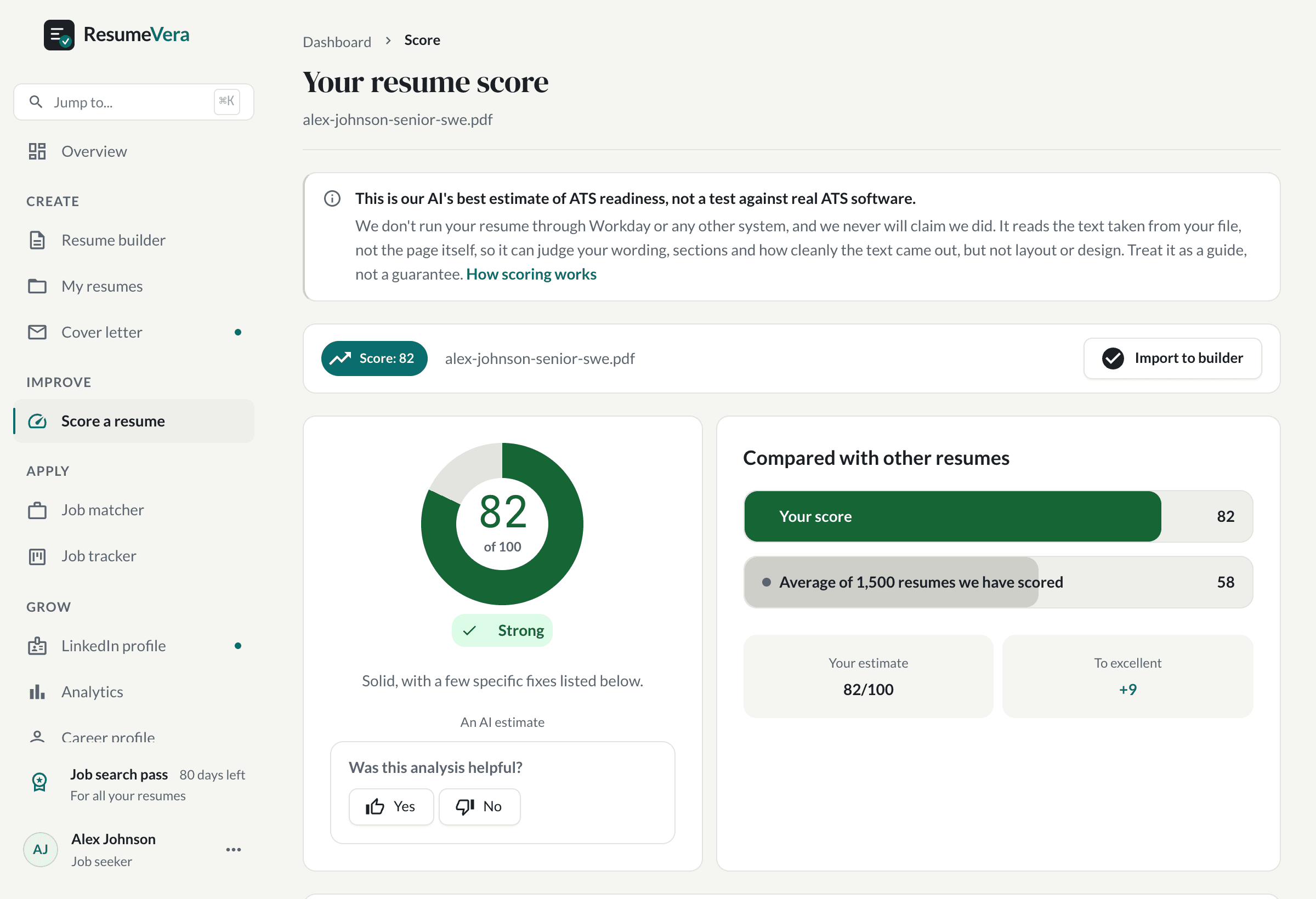
The real score page, with a sample resume and sample scores.
Now check it against your own resume
An honest resume score in seconds. No account, no card.