If you opened any sports app in June 2026, you saw the same thing: the Netherlands' Oranje dominating discussions, trending across X (formerly Twitter), and lighting up match prediction dashboards. But what you did not see in the trending feeds was the quiet, systematic work that began the moment the 2022 World Cup in Qatar ended.
A World Cup squad does not assemble itself. Coach Ronald Koeman and the KNVB staff spent three and a half years building toward 2026 — running tactical trials, integrating young players like Xavi Simons and Jurriën Timber into the system, developing depth at every position, and stress-testing their 4-3-3 under competitive pressure across Nations League and qualifying campaigns.
They had a game plan. A four-year game plan. And it is the single most underrated lesson in career strategy that nobody is teaching.
"Failing to prepare is preparing to fail." — Johan Cruyff, the philosophical father of Dutch football
Most Professionals Treat Their Career Like a Pickup Game
Here is a statistic that should make every working professional uncomfortable: according to LinkedIn's Global Talent Trends Report, only 15% of professionals have a written career development plan. The remaining 85% are, to use the football metaphor, showing up to the pitch without a formation, a scouted opponent, or a tactical brief.
They send resumes reactively — when they feel stuck, underpaid, or anxious. They apply to roles without researching whether the company or role aligns with their 5-year trajectory. They network only when they need something, which is the career equivalent of calling for the ball only when your team is 3-0 down with ten minutes left.
The Dutch national team does not do any of this. And neither should you.
The 4-Phase World Cup Game Plan (And Its Career Equivalent)
The KNVB's preparation for any major tournament follows a recognizable pattern. Here is how it maps to a structured career game plan:
| Phase | What the Dutch Do | Your Career Equivalent |
|---|---|---|
| 1. Audit | Analyze previous tournament: what worked, what didn't, what injured players need replacing | Honest skills audit: what do you do well, what's missing, what roles are you genuinely competitive for right now? |
| 2. Target | Identify the ideal tournament outcome and work backward to the squad needed to achieve it | Define your 12-month and 3-year career goal. Pick the specific role, company type, and compensation band you are targeting |
| 3. Build | Sign new players, develop youth, run training camps, simulate match conditions | Close skill gaps via courses, projects, or lateral moves. Build your portfolio, your network, and your personal brand |
| 4. Execute | Enter the tournament with a clear tactical system, a Plan B, and psychological readiness for adversity | Launch a focused, targeted job search: tailored resumes, warm outreach, structured interview prep, and a pipeline tracker |
Phase 1: The Career Audit — Knowing Your Actual Squad
Ronald Koeman does not manage with sentiment. When Virgil van Dijk's fitness is questionable or Memphis Depay's form has dipped, those facts appear in the squad selection data whether or not Koeman personally likes the player. The audit is honest.
Your career audit must be equally honest. Most professionals overestimate their transferable skills and underestimate how domain-specific their experience looks to recruiters in adjacent industries.
The Honest Skills Audit Framework
- List your top 10 skills — both hard (SQL, financial modelling, Python, UX research) and soft (stakeholder management, crisis communication)
- For each skill, rate your proficiency: Beginner / Intermediate / Advanced / Expert
- Check the gap: Open 5 job descriptions for your target role and highlight the skills they require most often. How many do you have at the right level?
- Identify your "injured players": Skills you once had but have not used in 2+ years — they may need refreshing before you can list them confidently
- Name your best 3 achievements from the last 18 months. If you cannot think of 3, that is a signal your current role is not helping you grow
Career Audit Template: Take 30 minutes this week to write down your top skills, your 3 best recent achievements (with numbers), and the gap between where you are and where you want to be in 12 months. That document is the start of your game plan.
Phase 2: Target Setting — The Right Formation for Your Career
A team playing a 4-3-3 attacks differently than one playing a 3-5-2. The formation determines which players are selected, how they train, and how the team executes in a match. Without a chosen formation, the squad is just eleven individuals on a pitch.
Without a clear career target, your job search is just a stream of random applications that go nowhere.
Effective career targeting means answering these questions with specificity:
- What specific role title am I targeting? Not "something in marketing" — "Senior Product Marketing Manager at a Series B SaaS company"
- What company stage fits my working style? Startup (high ambiguity, high upside), scale-up (structured growth), enterprise (process-heavy, brand name)
- What is my non-negotiable compensation floor? Know the number before you start — Glassdoor India and Levels.fyi are good starting benchmarks
- What is my industry focus? Narrowing your search to 2–3 industries dramatically increases the depth of your network and the relevance of your resume
- What is my 3-year trajectory from this role? The best role today is the one that opens the most doors in three years
Phase 3: Building Your Career Squad — Skills, Network, Brand
Between the 2022 and 2026 World Cups, the Dutch national team did not stand still. Xavi Simons went from PSV to RB Leipzig and emerged as one of Europe's most dangerous midfielders. Jurriën Timber rebuilt his body and his game after an ACL at Arsenal. The gap years were working years.
Your career "gap" between where you are and where you want to be is a working period too. Use it strategically:
Skill Building
- Identify 2–3 specific skills that appear in every job description for your target role
- Complete structured learning: Coursera, LinkedIn Learning, or sector-specific certification programs
- Apply the skill in a visible project — a side project, a volunteer initiative, or a stretch assignment at your current company. Certificates alone do not convince recruiters; demonstrated application does
Network Building
- Identify 10 people in roles similar to your target role and reach out with a specific, non-transactional message
- Post one piece of thoughtful professional content per week on LinkedIn — your POV on an industry trend, a lesson from a project, or a career insight
- Attend 2 industry events or virtual panels per quarter — not for job leads, but for context, relationships, and visibility
Personal Brand
The Netherlands' football brand is globally recognized: total football, technical precision, orange. Your professional brand should be equally clear. What are you known for? What problem do you solve? Who refers people to you, and what do they say?
Your LinkedIn headline is your personal brand's first impression. Make it specific: "Senior Growth Marketer | SaaS | Scaled 0→1 PLG motion at 3 startups" beats "Marketing Professional | Open to Work."
Phase 4: The Focused Job Search — Tournament Mode
When the World Cup actually begins, every squad member has a role. The starter knows their responsibility. The bench player knows exactly when and how they will be called upon. There is no ambiguity, no improvised tactics, no "let's see what happens."
Tournament mode for your job search looks like this:
- A tailored master resume — not one generic document, but a base resume that is customized for each application (keywords, metrics, summary)
- A target company list — 20–30 companies you have researched and genuinely want to join, not just 200 random applications
- A warm outreach tracker — knowing who you have messaged, when, and what the follow-up is
- Interview prep by competency — having STAR stories ready for the 8–10 most common interview competencies in your field
- A weekly cadence: 5 tailored applications, 3 warm outreaches, 1 coffee chat or informational interview
The most common job search mistake: Sending 100 generic applications and waiting. This is the career equivalent of kicking the ball forward and hoping someone else scores. Quality beats quantity every time. Five tailored applications with personalized cover notes will generate more interviews than 100 generic submissions.
The Hidden Advantage: Positioning Yourself for the Role Before It Is Posted
Here is something scouts know that most job seekers do not: the best opportunities are filled before they are advertised. According to LinkedIn research, approximately 70–80% of jobs are filled through networking and internal referrals before a public posting goes live.
The equivalent in football: the top clubs identify and pursue a player months before the transfer window opens. By the time the news breaks, the deal is largely done. The visible announcement is the last step, not the first.
Your goal is to be the player the company is already thinking about before the role is posted. That means being visible in the right conversations, having a presence in the right communities, and having a clear, compelling professional narrative that makes the referral easy.
Your Starting XI: The 11 Relationships Every Career Game Plan Needs
Every World Cup squad has 26 players, but the Starting XI are the relationships the coach trusts most in critical moments. Your career network works the same way — not hundreds of LinkedIn connections you never speak to, but 11 specific types of people who can move your career forward in meaningful ways.
Someone already working at one of your target companies who can refer you and share the internal hiring reality.
A senior professional in your field who has done what you want to do and can give you honest, experienced feedback.
A specialist recruiter in your domain who fills the types of roles you want and can put you in front of hiring managers.
Someone 2–3 years further along your desired career path. They are close enough to where you are to give practical, relevant guidance.
Someone in a different industry who can spot transferable trends and open doors in sectors you haven't considered.
A peer at your level who is also growing fast. You refer each other, share intel, and keep each other accountable.
Someone with a strong LinkedIn or professional presence who can amplify your content, co-create, or introduce you to their audience.
Someone who has been on the receiving end of your work and can speak to your impact authentically — a future reference or testimonial.
Someone who runs or is prominent in an industry community, Slack group, or professional forum where your target audience gathers.
Someone who will challenge your career assumptions, push back on your plan, and force you to stress-test your thinking. Rare and valuable.
Someone you admire from a completely different domain — tech, art, sport, academia — whose thinking reshapes how you see your own field.
You do not need all 11 relationships on day one. But mapping who you have, who you need, and who in your existing network could introduce you to the gaps is a powerful career audit exercise in itself.
Putting It All Together: Your 90-Day Career Game Plan
| Days | Focus | Key Actions |
|---|---|---|
| 1–30 | Audit + Target | Skills audit, target role definition, salary research, LinkedIn optimization, resume baseline |
| 31–60 | Build | Identify skill gaps, start learning, build target company list, begin warm outreach to 10 people |
| 61–90 | Execute | 5 tailored applications/week, 3 warm messages/week, interview prep, follow-ups, pipeline tracking |
Your Career Toolkit — All Free to Start
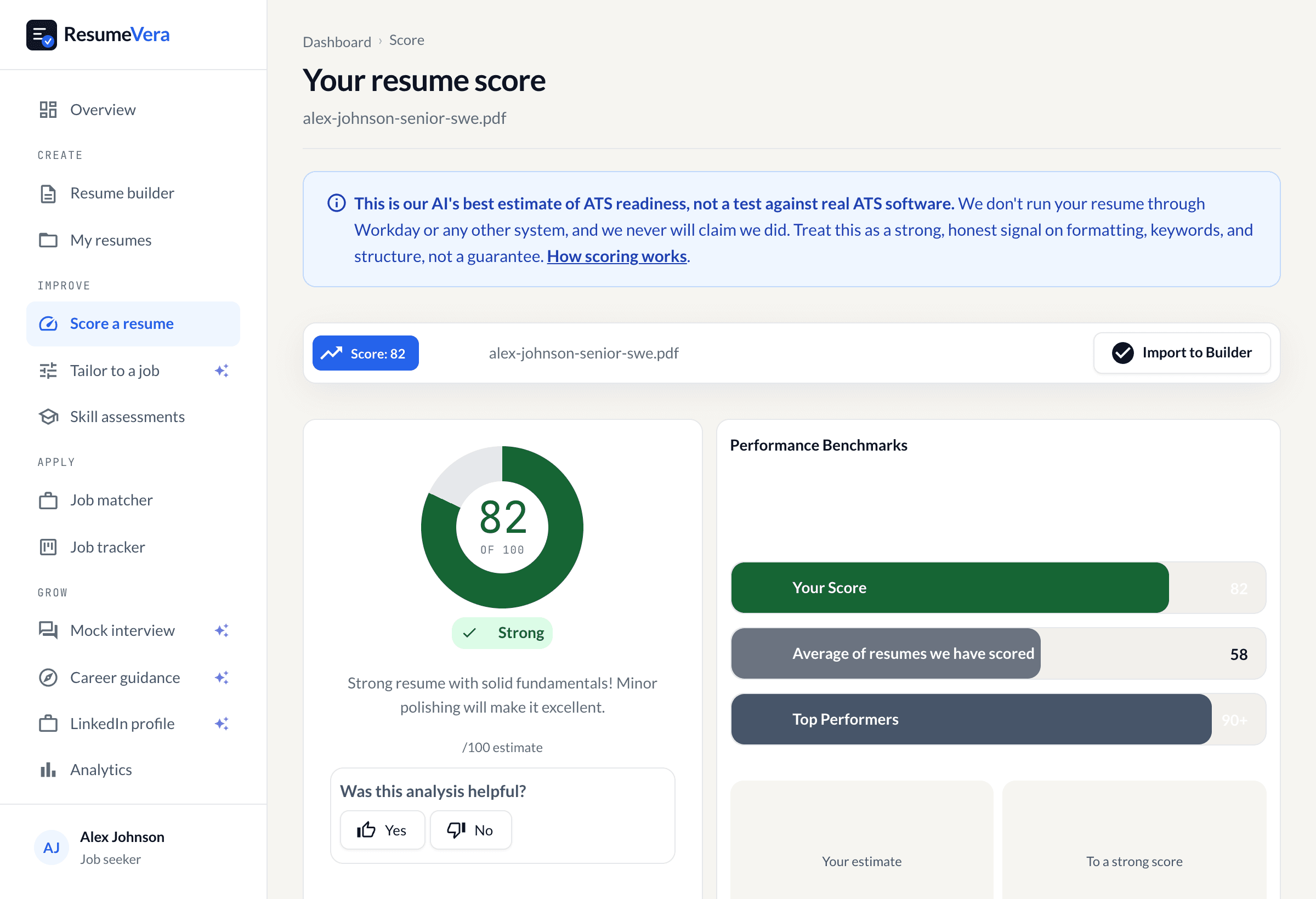
A strong game plan needs strong tools. Here is everything you need to audit your resume, optimize your LinkedIn, and get a personalized career roadmap.
Free to start · No credit card · The fastest way to know your resume's biggest weaknesses before your next application
References: LinkedIn Global Talent Trends 2025 | Glassdoor India Salary Data | Levels.fyi Compensation Data | KNVB Official | Harvard Business Review — Career Planning