Gratuity Calculator India 2026
Calculate your gratuity entitlement using the official Payment of Gratuity Act formula. See gross amount, tax-free portion, and net payout for private sector and government employees.
Employee Type
₹
Basic + DA only. Exclude HRA and allowances.
Years of Service
years
Minimum 5 years required for eligibility
Gratuity Amount
₹2,01,923
Fully tax-free, within ₹20L limit
Formula
(15 × ₹50,000 × 7) / 26
Gross Gratuity
₹2,01,923
Tax-Free Amount (up to ₹20L)
₹2,01,923
Net Gratuity (In Hand)
₹2,01,923
Tax shown assumes 30% marginal rate on taxable portion. Actual tax may be lower depending on your income slab. Gratuity must be paid within 30 days of your last working day.
Planning to move? Check your resume is ATS-ready.
Build My Resume, Free →What you need to know about gratuity
Three facts that affect how much you actually receive.
5 years = the magic number
You must complete 5 continuous years of service to be eligible. If you leave at 4 years 11 months, you forfeit the entire gratuity. The exception: death or permanent disability; no minimum service required.
Tax-free up to ₹20 lakhs
Private employees receive a tax exemption under Section 10(10) on gratuity up to ₹20L. This limit was last revised in 2018. Government employees receive a 100% exemption with no upper limit.
4.81% of basic is in your CTC
Your employer accrues ~4.81% of your basic monthly as gratuity expense each month. It appears in CTC but you see it only at separation. Leaving before 5 years means the employer keeps it, not you.
Example: Basic ₹60,000/month, 8 years of service (private)
Gratuity = (15 × ₹60,000 × 8) / 26 = ₹2,76,923. This is well below the ₹20L tax-free limit, so you receive the entire ₹2,76,923 tax-free. If your basic was ₹2,00,000/month over 30 years, gratuity would be ₹34,61,538, exceeding the ₹20L limit. This makes ₹14,61,538 taxable.
Gratuity quick reference, by years of service
Gratuity at ₹50,000/month basic, private sector.
5 years of service
₹1,44,231
7 years of service
₹2,01,923
10 years of service
₹2,88,462
15 years of service
₹4,32,692
20 years of service
₹5,76,923
25 years of service
₹7,21,154
30 years of service
₹8,65,385
All amounts tax-free (below ₹20L limit at ₹50K basic)
Gratuity eligibility rules
Resignation after 5 years
Fully eligible
Retirement
Fully eligible
Termination (without misconduct)
Fully eligible
Death or disability
Eligible (no 5-yr rule)
Resignation before 5 years
Not eligible
Termination for misconduct
Can be forfeited
Questions
Frequently asked questions
Gratuity rules, tax, and eligibility explained.
After this job
The next move is easier with the resume ready
The checker reads your resume the way a parser would and names what it cannot find, free and with no account.
Check your resume free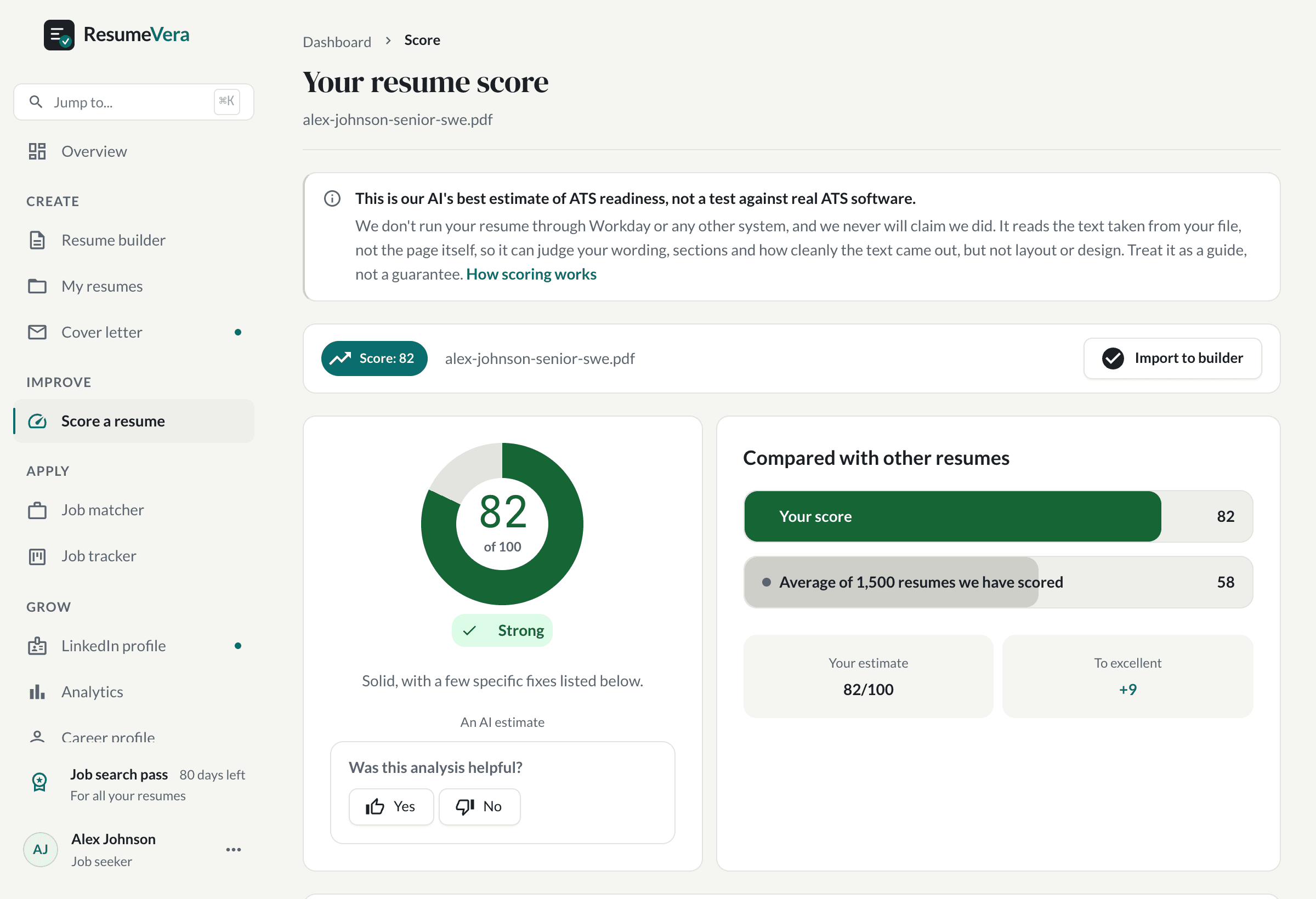
The real score page, with a sample resume and sample scores.
Leaving after 5 years? Make your next resume count.
Use your experience to land a better role. Build an ATS-ready resume with AI guidance and a live score. Free to start.