Notice period calculator India 2026: buyout and last working day
Work out how much it costs to buy out your notice period, with tax at your marginal rate, and the date your notice ends. Free, no sign-up.
₹
Your gross monthly cost to company
Notice Period Length
days
days
50 days remaining
Tax Regime (FY 2026-27)
Notice Period Buyout
Gross Amount
₹1,92,300
Real cost after tax
₹1,92,300
50 days remaining · 10% marginal tax rate
Daily Rate (CTC / 26)
₹3,846/day
Days Remaining
50 working days
Gross Buyout
₹1,92,300
Tax you no longer pay on it (~10% slab)
−₹0
Real cost to you
₹1,92,300
Assumes your employer recovers the buyout from your final salary. In Nandinho Rebello v. DCIT (ITAT Ahmedabad, 2017) the tribunal held you are taxed only on the salary you actually received, so the buyout is not taxed. The relief shown is an estimate from your slab. If you pay the buyout separately, or your Form 16 shows the full salary, check with a tax adviser before you file.
Switching jobs? Make sure your resume clears ATS first.
Check My Resume, Free →Notice period calculator: your last working day
Enter the day your resignation is accepted and your notice period. Most employers count that day as day one.
Last working day
Enter a date and a notice period of up to 365 days or 12 months.
How notice period buyout works
What you actually pay, how it is taxed, and how to reduce the cost.
You pay for the days you don't serve
Notice period buyout compensates your employer for the days remaining after your last working day. It is calculated as your daily CTC rate (monthly salary / 26) multiplied by remaining working days.
You are not taxed on it
When the buyout comes out of your final salary, you are taxed only on the salary you actually received (Nandinho Rebello v. DCIT, ITAT Ahmedabad, 2017). So its real cost is the buyout minus the tax that salary would have carried.
New employer may cover it
In competitive hiring, many employers offer joining bonuses specifically to cover notice period costs. Always negotiate this upfront, before signing the offer letter, not after you've resigned.
Example: ₹1.2L/month CTC, 60-day notice, 10 days served
Daily rate: ₹1,20,000 / 26 = ₹4,615/day. Days remaining: 50. Gross buyout: ₹2,30,750. Taking it off a ₹14.4L year brings taxable salary under ₹12L, where the new-regime rebate removes the tax entirely, so the tax you no longer pay is about ₹80,448 and the real cost is about ₹1,50,302. Further from the ₹12L line the saving is closer to your slab rate times the buyout. Compare this to asking your new employer for a ₹2.3L joining bonus to offset the cost.
Notice period buyout by CTC, quick reference
Gross buyout for 30 remaining days at different salary levels (new regime).
₹5L/yr (₹41.7K/month)
₹48,077
₹10L/yr (₹83.3K/month)
₹96,154
₹15L/yr (₹1.25L/month)
₹1,44,231
₹20L/yr (₹1.67L/month)
₹1,92,308
₹30L/yr (₹2.5L/month)
₹2,88,462
₹50L/yr (₹4.17L/month)
₹4,80,769
Formula: (Monthly CTC / 26) × 30 days
Ways to reduce your buyout cost
Negotiate early release
Ask your manager before resigning formally
Get new employer to pay
Negotiate joining bonus = buyout amount
Use earned leaves
Adjust remaining leaves against notice days
Mutual separation
Formal agreement to waive notice without buyout
Transfer within group
Internal moves often have waived notice periods
Ready to resign? Write the letter with the free resignation letter generator.
Questions
Frequently asked questions
Everything about notice period buyout in India.
Between jobs
Keep the moving parts in one place
The tracker holds every application in five stages you drag between, so notice, offers and interviews do not live in your inbox. Free, and it needs no pass.
Open the tracker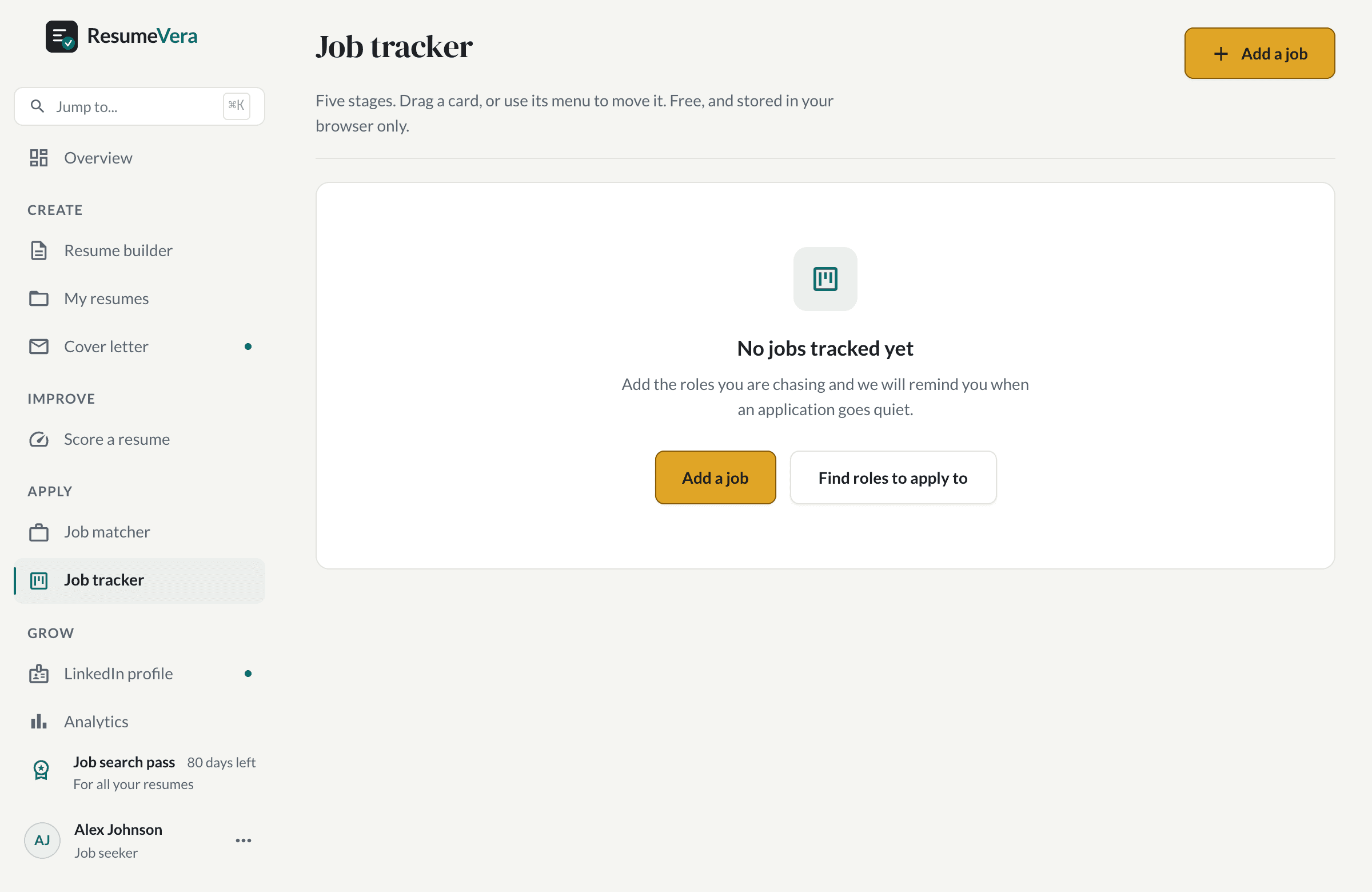
The real tracker, on a new account. Free forever, and it does not need a pass.
Switching jobs? Make your resume ATS-ready first.
Many employers screen resumes with an ATS before a person reads them. A free check takes a few seconds and shows exactly what to fix.