HR Manager Interview Questions 2026
22 real-world questions covering behavioral scenarios, employment law, talent strategy, performance management, and organizational culture.
Interview Questions
22 Questions with Answers
Click any question to reveal a detailed sample answer. Filter by category to focus your preparation.
How do you handle an employee complaint about their direct manager?
Sample Answer
Take every complaint seriously and follow a structured process. First, listen actively and document the specifics: dates, incidents, witnesses, and impact. Assure confidentiality to the extent possible while being honest that you may need to investigate. Assess the severity: harassment or discrimination requires immediate action and legal compliance. For management style complaints, investigate both sides objectively. Interview the manager and relevant witnesses. Review patterns: is this an isolated complaint or part of a trend? Determine appropriate action: coaching for the manager, mediation, formal corrective action, or restructuring the reporting relationship. Follow up with the employee regardless of outcome. Document everything for legal protection. The goal is to resolve the issue fairly while maintaining trust in HR as a safe resource.
Describe your approach to building a diverse and inclusive workplace.
Sample Answer
DEI must be embedded in processes, not treated as a standalone initiative. Start with data: analyze representation across hiring pipeline, promotion rates, pay equity, and retention by demographics. Remove bias from hiring: structured interviews with standardized scoring, diverse interview panels, blind resume screening, and inclusive job descriptions (avoid gendered language and unnecessary requirements). Build inclusive culture through ERGs (Employee Resource Groups), inclusive leadership training, and accountability at every level. Measure with specific goals: representation targets, engagement survey scores by demographic, and promotion equity ratios. Address pay equity annually with compensation audits. Most importantly, leadership must model inclusive behavior. DEI without accountability is just talk.
How would you implement a new performance management system?
Sample Answer
Start with diagnosis: what is wrong with the current system? Common issues include annual reviews being too infrequent, ratings being subjective, and the process being disconnected from development. Design the new system based on best practices: continuous feedback (monthly or quarterly check-ins), goal alignment with company OKRs, both manager and peer feedback, and development-focused rather than purely evaluative. Pilot with one department to test and refine. Train managers on giving effective feedback and having difficult conversations. Communicate the change to all employees with a clear 'why.' Phase in gradually rather than a big-bang switch. Measure adoption through completion rates, quality of feedback given, and employee satisfaction with the process. Iterate based on feedback.
Tell me about a time you had to communicate an unpopular HR policy change.
Sample Answer
Use the STAR method: 'Our company needed to implement a return-to-office policy requiring 3 days in-office after 2 years of remote work. I knew this would face strong resistance. My approach: I first briefed all managers with FAQs and talking points so they could handle team questions. I then hosted company-wide Q&A sessions explaining the business reasoning (collaboration, culture, mentorship for junior staff) and acknowledging the impact on work-life balance. I implemented flexibility within the framework: teams could choose their 3 days, core hours were flexible, and we added a monthly remote work week. I monitored engagement surveys and attrition for 3 months post-change. Attrition increased slightly in month 1 but stabilized. Key learning: transparency about the why, combined with reasonable flexibility, makes unpopular changes manageable.'
How do you handle a situation where you need to terminate an underperforming employee?
Sample Answer
Termination should never be a surprise to the employee. Follow a documented progressive discipline process: verbal coaching with documented follow-up, written warning with specific improvement targets and timeline (typically 30-60 day PIP), and final written warning with clear consequences. At each stage, provide specific examples, measurable goals, resources for improvement, and regular check-ins. If the employee does not improve, termination is the final step. Coordinate with legal to ensure compliance with employment laws, documentation, and severance if applicable. During the termination meeting, be direct, compassionate, and brief. Have a witness present. Provide information about benefits continuation, outplacement support, and final paycheck. Respect the employee's dignity throughout the process.
What is your approach to employee retention? How do you reduce turnover?
Sample Answer
Retention starts with understanding why people leave. Conduct exit interviews and analyze turnover data by department, tenure, and manager. The top drivers of turnover are: poor management, lack of career growth, below-market compensation, and toxic culture. Address each systematically: invest in manager training (people leave managers, not companies), create visible career paths and internal mobility programs, conduct annual compensation benchmarking, and measure culture through engagement surveys with action plans. Implement stay interviews: proactively ask high performers what keeps them and what might cause them to leave. Build recognition programs that are frequent and specific, not just annual awards. Track retention metrics by segment and hold managers accountable for their team's engagement scores.
Explain how you would design an onboarding program for new hires.
Sample Answer
Effective onboarding extends beyond day one to at least 90 days. Pre-boarding: send welcome materials, equipment, and team introductions before the start date. Week 1: company overview, values, tools setup, team introductions, and buddy assignment. Month 1: role-specific training, initial projects with clear guidance, regular manager check-ins, and HR touchpoint. Month 2-3: increasing autonomy, cross-functional introductions, feedback sessions, and 30-60-90 day reviews. Measure onboarding effectiveness with: time to productivity, new hire satisfaction surveys, buddy feedback, and 6-month retention rate for new hires. Best practices: assign a dedicated buddy (not the manager), create role-specific onboarding playbooks, and build in social connections early. Companies with structured onboarding programs see 82% higher new hire retention.
How do you stay current with employment law changes?
Sample Answer
Maintain a multi-source approach: subscribe to HR legal updates from SHRM, law firms specializing in employment law, and state-specific compliance services. Attend annual employment law updates from legal counsel. Build relationships with your employment law attorneys for complex situations. Use compliance management software that alerts you to regulatory changes in your jurisdictions. Participate in HR professional networks and forums for peer insights. Key areas to monitor: wage and hour law changes, leave law expansions, pay transparency requirements, AI-in-hiring regulations (rapidly evolving in 2026), and remote work tax implications. Create a compliance calendar for recurring obligations: EEO-1 reporting, benefits renewal, poster updates, and mandatory training deadlines.
Describe a time you successfully mediated a conflict between two employees.
Sample Answer
STAR example: 'Two senior engineers had escalating conflicts over technical decisions that were affecting team productivity and morale. I met with each individually to understand their perspective and underlying concerns. Both felt their expertise was being dismissed. I facilitated a structured mediation session with ground rules: no interrupting, focus on behaviors not personalities, and seek solutions not blame. I guided them through identifying shared goals (quality product, on-time delivery) and established a decision-making framework for future technical disagreements (data-driven evaluation with team input). I followed up weekly for a month. The relationship improved significantly, and the team's velocity increased by 20%. The key was treating it as a process problem, not a personality conflict.'
How do you measure the effectiveness of HR initiatives?
Sample Answer
Every HR initiative should have defined KPIs before launch. Common metrics: employee engagement scores (quarterly pulse surveys), turnover rate (voluntary vs involuntary, by department), time to fill open positions, cost per hire, offer acceptance rate, employee NPS, training ROI, and absenteeism rate. For specific initiatives: training effectiveness measured by behavior change and business impact (Kirkpatrick model), DEI programs tracked by representation changes and promotion equity, and wellness programs measured by participation, health claims, and productivity. Present HR metrics in business terms: turnover costs, productivity gains from engagement improvements, and revenue impact of faster hiring. Create dashboards that leadership reviews monthly. What gets measured gets managed.
How would you handle a sexual harassment complaint?
Sample Answer
Follow a strict protocol: take the complaint immediately and seriously regardless of the accused person's seniority. Document the allegation in detail. Inform the complainant of the investigation process and anti-retaliation protections. Separate the parties if necessary to prevent further incidents. Launch a prompt, thorough, and impartial investigation: interview all relevant witnesses, review documentation and communications, and maintain strict confidentiality. Engage legal counsel, especially for senior-level or complex cases. Make a determination based on the evidence and take appropriate action: coaching, warning, suspension, or termination depending on severity. Document the entire process meticulously. Follow up with the complainant to ensure no retaliation occurs. Review and strengthen prevention policies and training.
What is your philosophy on compensation and benefits strategy?
Sample Answer
Compensation should be market-competitive, internally equitable, and transparently communicated. Conduct annual compensation benchmarking against relevant peer companies and geographies. Build a salary band structure with clear criteria for placement and progression. Ensure pay equity across gender, race, and other demographics through regular audits. Benefits should reflect employee demographics and preferences: healthcare, retirement, learning budgets, flexible work arrangements, and mental health support. Total rewards communication is critical: employees often undervalue their benefits. With pay transparency laws expanding in 2026, be proactive about sharing pay ranges and compensation philosophy. Compensation is a retention tool, but research consistently shows it is a dissatisfier (causes leaving if poor) more than a satisfier (does not alone drive engagement).
How do you balance being an employee advocate and a business partner?
Sample Answer
This is the fundamental tension of HR. The answer is not choosing one over the other but finding solutions that serve both. When proposing to leadership, frame employee needs in business terms: 'Investing in mental health benefits costs X but reduces turnover by Y, saving Z in replacement costs.' When communicating to employees, be honest about business constraints while advocating for fair treatment. Build trust with both sides through transparency and consistency. Sometimes you must push back on leadership decisions that would harm employees and the business long-term (cutting training budgets, unfair terminations). Other times you must deliver difficult messages to employees (layoffs, policy changes). Credibility comes from being honest, fair, and data-driven, not from being popular.
How would you build a succession planning program?
Sample Answer
Identify critical roles: positions where vacancy would significantly impact business operations. Assess current incumbents for retention risk and retirement timelines. Evaluate potential successors using the 9-box grid (performance vs potential). Create individual development plans for high-potential employees: stretch assignments, mentoring, leadership training, and cross-functional exposure. Build a talent pipeline 2-3 levels deep for critical roles. Review succession plans quarterly with leadership. Common pitfalls: focusing only on senior roles (mid-level succession gaps cause bottlenecks), confusing high performance with high potential, and creating plans without development actions. Success metrics: percentage of critical roles with identified successors, internal promotion rate, and time to fill critical roles. Succession planning is continuous, not annual.
Tell me about a time you implemented a change that improved employee satisfaction.
Sample Answer
STAR example: 'Engagement survey data showed that career development was the lowest-scoring category at 45% favorable. I analyzed the data by department and tenure, discovering that mid-level employees (2-5 years) were most dissatisfied due to lack of visible career paths. I designed a career framework program with three components: clear competency-based leveling criteria for each role family, quarterly career conversations between managers and reports (separate from performance reviews), and a monthly internal job fair highlighting lateral move opportunities. Within 6 months, the career development score improved to 68% favorable, and internal mobility increased by 35%. Voluntary turnover among the 2-5 year cohort dropped from 25% to 14%. The key insight was that people do not just want promotion; they want clarity about their growth options.'
How do you handle a layoff or reduction in force?
Sample Answer
Layoffs require careful legal, financial, and human planning. Work with legal counsel to ensure compliance with WARN Act requirements, avoid discriminatory impact, and prepare severance agreements. Selection criteria must be objective, documented, and defensible (performance ratings, seniority, skills needed for future operations). Plan the communication: leadership delivers the business rationale, managers deliver individual notifications with HR present, and HR provides support packages. Offer meaningful severance, benefits continuation, outplacement services, and reference letters. Support remaining employees who will experience survivor guilt and increased anxiety. Be transparent about the business rationale. After layoffs, assess workload distribution, update organizational charts, and monitor morale closely. Handled with dignity, layoffs can be managed without destroying employer brand.
What HR technology platforms have you worked with?
Sample Answer
Discuss your experience with HRIS (Workday, BambooHR, SAP SuccessFactors), ATS (Greenhouse, Lever, iCIMS), performance management (Lattice, 15Five, Culture Amp), learning management (LinkedIn Learning, Udemy Business), and payroll systems (ADP, Gusto, Paychex). What matters more than specific tools is your approach to HR technology: define requirements based on HR processes, evaluate vendors against those requirements, plan data migration carefully, train users thoroughly, and measure adoption. In 2026, AI-powered tools are increasingly used in recruiting (screening, scheduling), engagement (sentiment analysis), and analytics (predictive turnover modeling). Be prepared to discuss how you evaluate AI tools critically, especially around bias and privacy concerns.
How do you foster a positive company culture in a hybrid work environment?
Sample Answer
Hybrid culture requires intentional design. Establish clear norms: which meetings are in-person, which are remote, and what are response time expectations. Ensure equity between remote and in-office employees in visibility, promotion, and inclusion. Create virtual touchpoints: team standups, virtual coffee chats, and asynchronous social channels. Use in-office days for collaboration, team building, and mentorship, not just individual work. Invest in technology that enables seamless hybrid meetings (quality cameras, collaborative tools). Train managers to lead hybrid teams: avoid proximity bias, schedule inclusive meeting times, and document decisions for async consumption. Measure hybrid culture health through engagement surveys segmented by work location. The biggest risk is a two-tier culture where remote employees become second-class citizens.
What salary range are you expecting for this HR Manager role?
Sample Answer
Research market rates on SHRM salary data, Glassdoor, and PayScale. HR Managers in the US typically earn $80K-$110K for mid-level and $110K-$150K+ for senior roles with strategic responsibility. Frame your response: 'Based on my experience in employee relations, talent management, and organizational development, combined with my SHRM-SCP certification and track record of improving retention metrics, I am targeting total compensation in the range of X to Y. I am also interested in understanding the scope of this role in terms of team size, strategic versus operational balance, and growth opportunities. I am open to discussing the full package.'
Why did you choose a career in human resources?
Sample Answer
Share a genuine motivation that connects to the strategic impact of HR. For example: 'I chose HR because I believe that how a company treats its people is the strongest predictor of its long-term success. Early in my career, I saw firsthand how a toxic manager drove away an entire team of talented engineers, costing the company millions in lost productivity and rehiring. That experience showed me that HR is not just an administrative function; it directly impacts business performance. What fulfills me is the combination of strategic thinking (designing compensation structures, succession plans) and human connection (coaching employees, mediating conflicts, helping people grow). In this role, I would bring both the analytical rigor and the empathy that effective HR requires.'
How do you handle an investigation where a senior leader is accused of misconduct?
Sample Answer
The process must be the same regardless of seniority; anything less erodes organizational trust. Engage external legal counsel or an independent investigator to avoid conflicts of interest. Report to the board or audit committee if the CEO is involved. Follow the standard investigation protocol: document the complaint, interview witnesses, review evidence, and maintain strict confidentiality. Be prepared for pressure to minimize or rush the investigation. Document any interference attempts. Make recommendations based solely on the evidence and the same standards applied to any employee. Communicate the outcome appropriately while maintaining legal protections. If the complaint is substantiated, appropriate consequences must follow regardless of the individual's value to the organization. Failing to act consistently destroys HR credibility and organizational culture.
How do you use data and analytics to drive HR decisions?
Sample Answer
People analytics transforms HR from reactive to proactive. Key analyses: predictive turnover modeling (identifying flight-risk employees before they resign using engagement, tenure, compensation, and manager quality data), hiring funnel analytics (conversion rates at each stage to identify bottlenecks), engagement driver analysis (which factors most impact engagement scores), compensation competitiveness benchmarking, and time-to-productivity for new hires. Build dashboards that leadership can access in real-time. Present insights as stories, not just numbers: 'Employees whose managers have one-on-one meetings less than once a month are 3x more likely to leave within 6 months.' Use data to build business cases for HR investments. Always consider data privacy and ethical implications of people analytics, especially with AI-driven insights.
Preparation Tips
Interview Preparation Tips
Prepare STAR stories covering conflict resolution, policy implementation, termination, and culture-building scenarios.
Know your employment law fundamentals: FMLA, ADA, Title VII, FLSA, and state-specific requirements for your target market.
Be ready to discuss metrics: how you have measured HR program effectiveness and tied it to business outcomes.
Research the company's Glassdoor reviews and recent news to understand their current HR challenges.
Practice explaining complex HR concepts simply: you need to communicate with both executives and frontline employees.
Prepare examples of how you have used data and technology to improve HR processes.
Avoid These
Common Mistakes to Avoid
Giving generic answers about 'caring about people' without demonstrating strategic business acumen.
Not being able to discuss specific employment law requirements and compliance procedures.
Failing to provide examples with measurable outcomes: improved retention rates, reduced time-to-hire, engagement score improvements.
Over-emphasizing the administrative aspects of HR instead of strategic and consultative capabilities.
Not preparing for scenario-based questions about investigations, terminations, and policy communication.
Ignoring the growing importance of HR analytics, AI tools, and data-driven decision-making.
Related Roles
Explore Other Interview Guides
Preparing for multiple roles? Check out interview questions for related positions.
Interview Guides
Explore More Interview Questions
Browse all our interview question guides with detailed answers and preparation tips.
View All Interview GuidesPractise
Reading questions is not the same as answering them
A mock interview generates its questions from this role and from your own resume, then tells you what a hiring manager would take from each answer.
Join the waitlist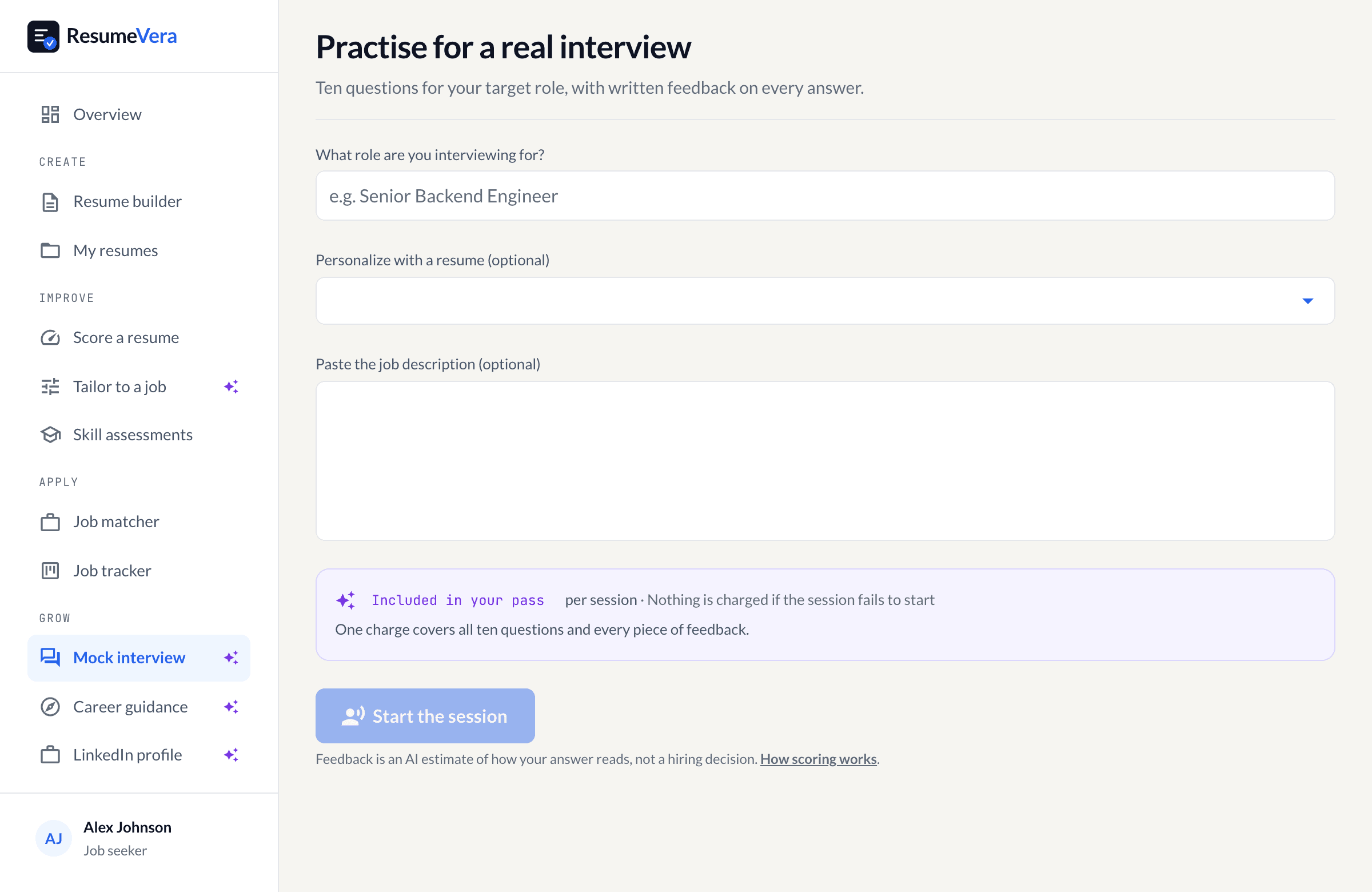
The real screen. Questions are generated from the role you pick and your own resume.
Is your resume ATS-ready?
Run a free ATS score check and get specific improvements in under 60 seconds.