In force · 1 October 2025
California: rules aimed at the employer, not a notice to you
California's FEHA regulations have covered automated decision systems in employment since October 2025. They are strong on bias testing and record keeping, and they do not give you a right to be notified.
The ResumeVera team
Checked against the statute and dated. Where a law is not yet in force, or its enforcement is stayed, this page says so rather than describing it as if it applied.
Updated Oct 7, 2026
5 min

Section 01
What this page is
This is information for job seekers, not legal advice, and it is current as at August 2026. This area moves quickly, so check the primary source linked at the end before relying on any of it for a decision that matters.
Section 02
What the law covers
The California Civil Rights Council adopted regulations, effective 1 October 2025, applying the Fair Employment and Housing Act to automated decision systems used in employment. An automated decision system is defined broadly: a computational process that makes, or facilitates a human making, a decision about an employment benefit.
They apply to employers with five or more employees in California.
Section 03
What they require of employers
That an automated system must not produce discrimination on a protected characteristic, whether directly or by disparate impact. Bias testing, record keeping and vendor responsibility are the three practical areas, and records including selection criteria, relevant outputs and audit findings must be kept for four years.
The vendor point matters: the rules reach the developers of these tools, not only the employers buying them.
Section 04
What they do not give you
A notice. Unlike New York City, Illinois or Ontario, California's approach is to regulate the employer's conduct rather than to require that you be told. So you can be screened by an automated system in California and never learn that you were.
What the regulations give you instead is a clearer basis for a discrimination claim if a tool did treat you differently on a protected characteristic, and a four year paper trail that has to exist if it did.
Section 05
What to actually do
You cannot rely on being told, so ask. And if you have reason to believe an automated tool treated you differently because of a protected characteristic, the relevant records are required to exist for four years, which is a materially different position from having to prove they ever existed.
Pro tips
Do these
Check the date on anything you read about AI hiring law. Several widely cited statutes have been postponed, repealed or replaced.
A disclosure rule tells you what is happening. It does not usually give you a right to a different process.
None of these laws gives you a right to see your own score or ranking.
Knockout questions, not resume parsing, are what genuinely rejects an application automatically.
Asking a recruiter directly costs nothing, and how they answer tells you something either way.
Avoid these
Delete these
Assuming a law described in an article from last year is still in force. Three of the eight jurisdictions we track have moved.
Expecting to be shown your score. No jurisdiction on this page grants that.
Treating a disclosure requirement as a right to a human reviewer. Only New York City comes close, and it is a request rather than a guarantee.
Believing a model deleted your application when a knockout question is the likelier explanation.
Rewriting a resume for software rather than for a reader. The changes that help a parser help a person too.
Keywords
Keywords by category
Use these in your resume and profile to improve search visibility.
Core phrases
Put this into a resume
Building and editing are free, and free PDFs carry a small watermark.
Check my resume freeQuestions
Frequently asked questions
How this guide is maintained
We review this guide every quarter and after any change to the hiring rules or portal behaviour it describes. It was last reviewed on October 7, 2026. Figures come from named sources, shown beside the number. Where we are estimating rather than measuring, we say so.
By the numbers
Oct 2025
when the FEHA automated-decision system regulations took effect
California Civil Rights Council
5+
employees in California for the regulations to apply
California Civil Rights Council
4 years
that an employer must retain automated-decision records, including selection criteria and audit findings
California Civil Rights Council
None
of it is a candidate notice requirement, unlike New York City or Illinois
Reading of the regulations as at August 2026
Try it
Check the guide against your own file
Everything above is general. Your resume is not. Paste it in and the checker tells you which of these points your file actually breaks.
Check your resume free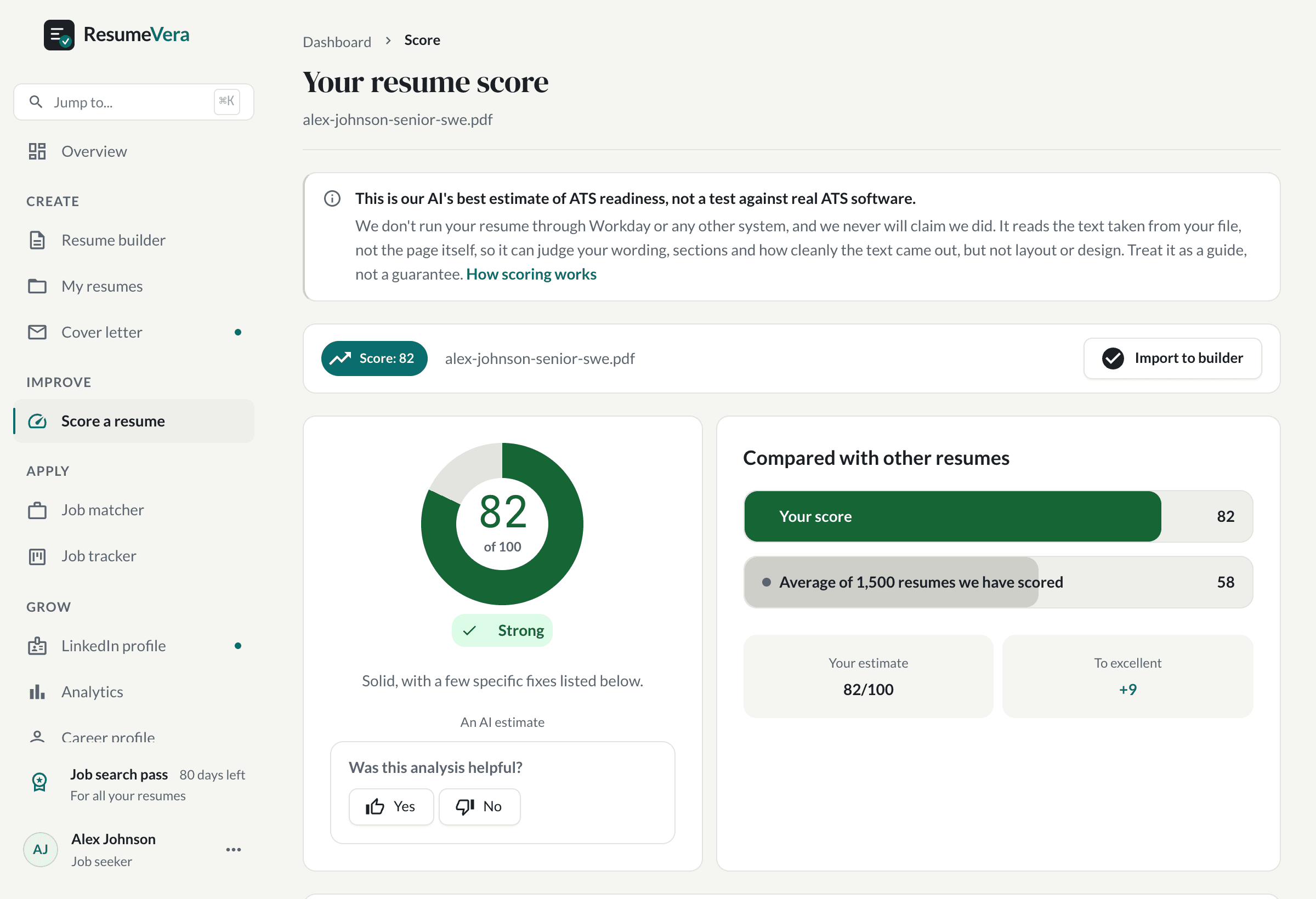
The real score page, with a sample resume and sample scores.
Sources & further reading
The formatting guidance and figures on this page draw on the following authoritative sources.
- California Civil Rights Department, employment regulations on automated-decision systems, The department behind the Civil Rights Council regulations, effective 1 October 2025, applying FEHA to automated decision systems in employment.
Is your resume ATS ready?
Run a free ATS score check and get specific improvements in seconds.