In force · 5 February 2026
United Kingdom: your right to challenge a solely automated decision
Since February 2026, a significant decision taken about you with no meaningful human involvement carries a right to be told, to make representations, to get human intervention and to contest it. It is data protection law, not employment law, and it applies to hiring anyway.
The ResumeVera team
Checked against the statute and dated. Where a law is not yet in force, or its enforcement is stayed, this page says so rather than describing it as if it applied.
Updated Oct 7, 2026
5 min
Section 01
What this page is
This is information for job seekers, not legal advice, and it is current as at August 2026. This area moves quickly, so check the primary source linked at the end before relying on any of it for a decision that matters.
Section 02
What the law covers
Section 80 of the Data (Use and Access) Act 2025 replaced Article 22 of the UK GDPR with new Articles 22A to 22D, in force from 5 February 2026.
This is general data protection law rather than a hiring rule, which is why it is easy to miss. It applies to recruitment because recruitment is processing of your personal data.
Section 03
The two tests that matter
A decision is solely automated if there is no meaningful human involvement in taking it. The word doing the work is meaningful: a person clicking approve on a ranked list is not obviously meaningful involvement, and the legislation directs that the extent of profiling be considered when judging it.
A decision is significant if it produces a legal effect for you or something similarly significant. Not being hired clears that bar comfortably.
Section 04
What you can ask for
Where both tests are met, Article 22C requires that you be given information about the decision, an opportunity to make representations, human intervention, and the ability to contest it.
That is the strongest set of rights in any jurisdiction on this page, and the least widely known, because nothing about it mentions employment.
Section 05
What to actually do
If you were rejected and believe no person genuinely looked at your application, you can ask the employer whether the decision was solely automated, and if it was, ask for human intervention and for the decision to be reconsidered. Frame it as a data protection request rather than a complaint about the outcome.
Pro tips
Do these
Check the date on anything you read about AI hiring law. Several widely cited statutes have been postponed, repealed or replaced.
A disclosure rule tells you what is happening. It does not usually give you a right to a different process.
None of these laws gives you a right to see your own score or ranking.
Knockout questions, not resume parsing, are what genuinely rejects an application automatically.
Asking a recruiter directly costs nothing, and how they answer tells you something either way.
Avoid these
Delete these
Assuming a law described in an article from last year is still in force. Three of the eight jurisdictions we track have moved.
Expecting to be shown your score. No jurisdiction on this page grants that.
Treating a disclosure requirement as a right to a human reviewer. Only New York City comes close, and it is a request rather than a guarantee.
Believing a model deleted your application when a knockout question is the likelier explanation.
Rewriting a resume for software rather than for a reader. The changes that help a parser help a person too.
Keywords
Keywords by category
Use these in your resume and profile to improve search visibility.
Core phrases
Put this into a resume
Building and editing are free, and free PDFs carry a small watermark.
Check my resume freeQuestions
Frequently asked questions
How this guide is maintained
We review this guide every quarter and after any change to the hiring rules or portal behaviour it describes. It was last reviewed on October 7, 2026. Figures come from named sources, shown beside the number. Where we are estimating rather than measuring, we say so.
By the numbers
Feb 2026
when Articles 22A to 22D replaced the old Article 22 of the UK GDPR
Data (Use and Access) Act 2025, section 80
4
safeguards on a solely automated significant decision: information, representations, human intervention, and the right to contest
UK GDPR Article 22C
Meaningful
the test for human involvement. A rubber stamp does not make a decision non-automated
UK GDPR Article 22A
Try it
Check the guide against your own file
Everything above is general. Your resume is not. Paste it in and the checker tells you which of these points your file actually breaks.
Check your resume free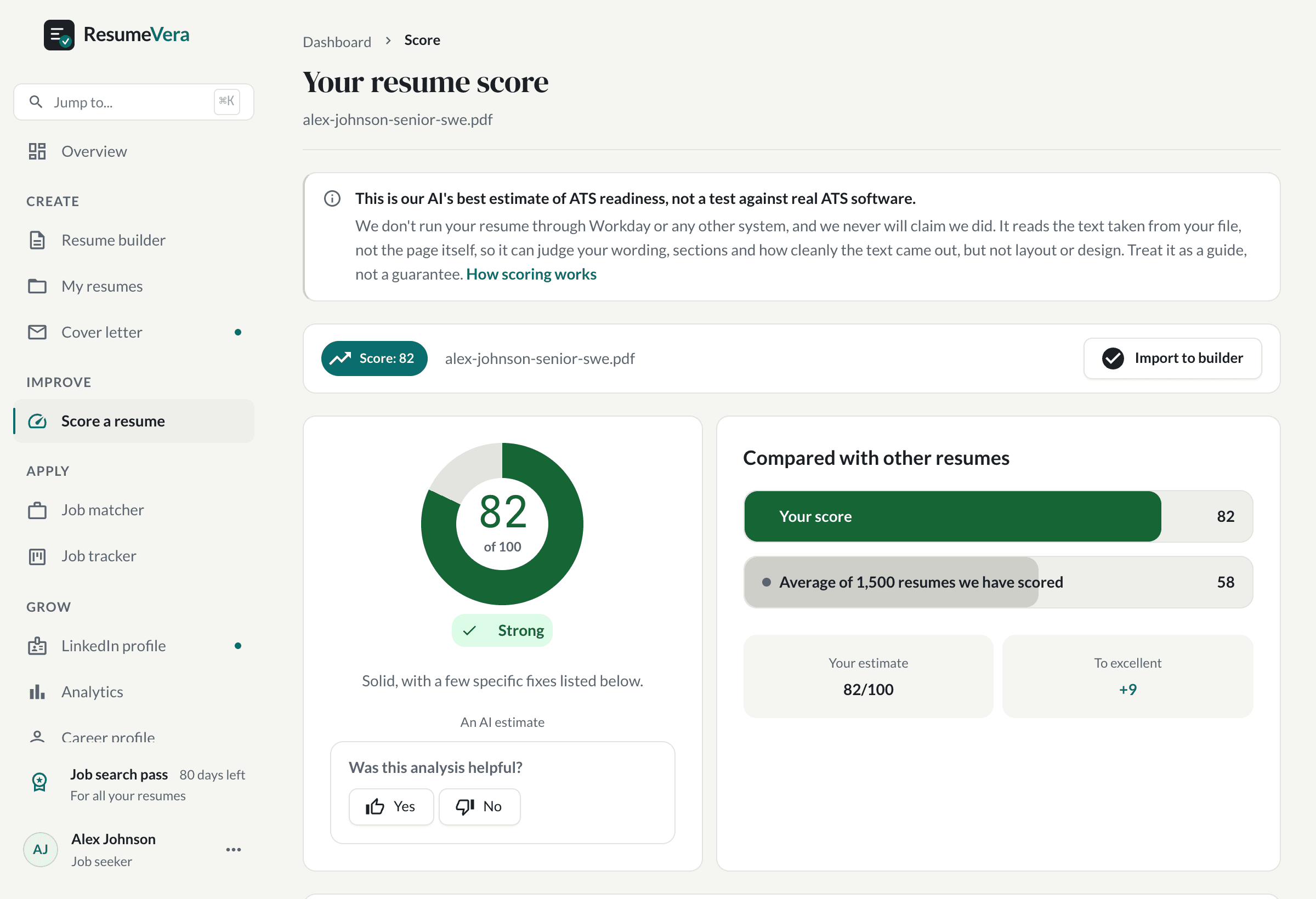
The real score page, with a sample resume and sample scores.
Sources & further reading
The formatting guidance and figures on this page draw on the following authoritative sources.
- Data (Use and Access) Act 2025, automated decision-making provisions, Section 80, replacing UK GDPR Article 22 with Articles 22A to 22D. In force 5 February 2026.
Is your resume ATS ready?
Run a free ATS score check and get specific improvements in seconds.