UK ILR moves to 10 years: who still settles in 5 with £50,271
Job Search · ResumeVera Editorial Team · November 12, 2026 · 9 min read
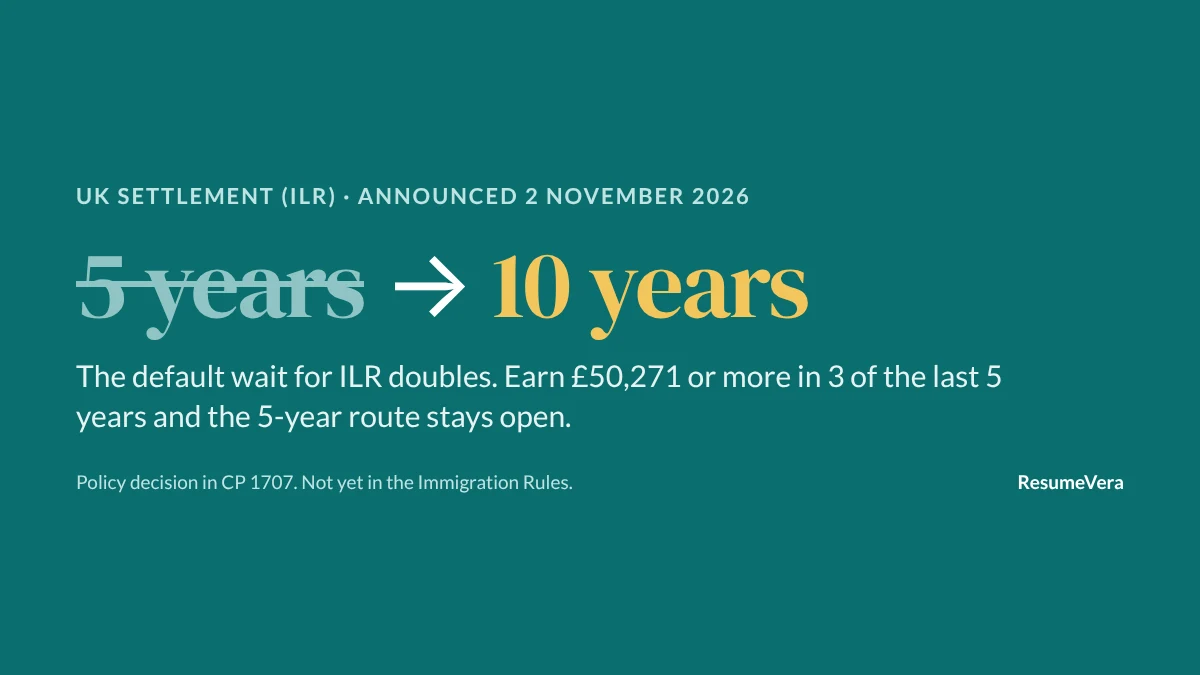
Short answer: The UK government confirmed on 2 November 2026 that the default route to settlement (indefinite leave to remain, or ILR) will take 10 years, not 5. You can still settle after 5 years if you earn £50,271 or more in 3 of the 5 years before you apply, work in an eligible public service job, or have a British connection. This is a policy decision in command paper CP 1707. It is not yet in the Immigration Rules and no start date has been published.
Last reviewed: 12 November 2026. We update this page when the Home Office lays rules or publishes guidance.
If you are on a Skilled Worker visa, or studying in the UK and planning to stay, the number that matters to your long-term plan has changed. For most people it is no longer "five years to ILR". It is a salary: £50,271.
This guide sets out the four pathways, which visa years count, who is protected, and worked examples for the situations Indian professionals and students ask about most.
What was announced on 2 November 2026?
Home Secretary Shabana Mahmood made a statement to Parliament and the Home Office published its response to the earned settlement consultation, "A Fairer Pathway to Settlement" (CP 1707), the same day. The consultation drew 204,667 responses, 202,241 of them from individuals.
The core decision: settlement is to be earned through earnings, occupation and conduct, with a 10-year baseline for everyone who does not qualify for something faster.
Is this law yet?
No. CP 1707 is a government policy paper. The change only takes legal effect when the Immigration Rules are amended through a Statement of Changes.
CP 1707 gives no general start date. It says further guidance will be published before implementation. Immigration lawyers' notes on the Commons session report the Home Secretary saying rule changes would start to be laid from December 2026 and be implemented during 2027. We could not find that timing in CP 1707 or in the published text of the statement, so treat it as a guide and not a deadline.
The four pathways and their salary thresholds
Table 1 of CP 1707 sets out four routes. Which one applies depends on what you earned in the years before you apply.
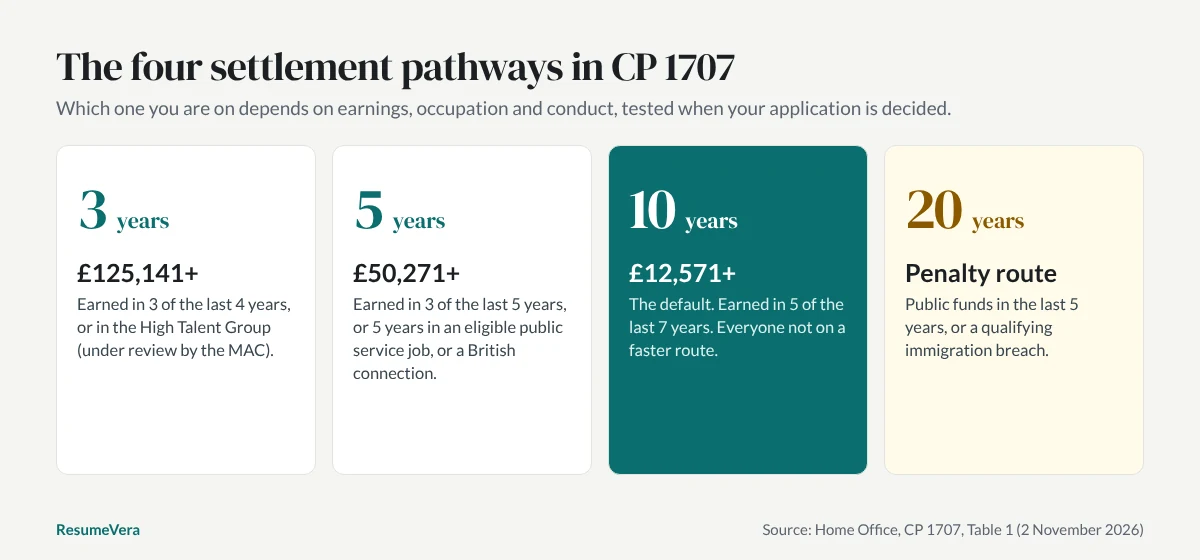
| Pathway | Who qualifies | Earnings test |
|---|---|---|
| 3 years | Very high earners, or the High Talent Group (subject to a Migration Advisory Committee review) | £125,141 or more in 3 of the last 4 years |
| 5 years | Higher earners, people with 5 years in an eligible public service occupation, or people with a British connection | £50,271 or more in 3 of the last 5 years |
| 10 years | The default for everyone else | £12,571 or more in 5 of the last 7 years |
| 20 years | People who used public funds in the last 5 years or committed a qualifying immigration breach | £12,571 or more in 5 of the last 7 years |
Three things to notice.
- The thresholds are not the Skilled Worker visa threshold. You need £41,700 (or your occupation's going rate) to get a Skilled Worker visa. You need £50,271 to settle in 5 years. Someone on £45,000 can hold the visa and still be on the 10-year route. Current visa figures are in our Skilled Worker salary threshold guide.
- You do not need the salary every year. The 5-year test is 3 years out of 5. A pay rise partway through can still get you there.
- The Home Secretary's statement rounds the figures. It says "over £50,000" and "over £125,000". The exact numbers, £50,271 and £125,141, are in CP 1707. Each sits £1 above a current UK income tax band threshold.
Requirements on every pathway
CP 1707 lists conditions that higher earnings cannot offset: good character and suitability, no outstanding government debt (including NHS, tax and National Insurance), English at B2 level, and a pass in the Life in the UK test. Existing exemptions for children, people aged 65 or over and some medical conditions continue.
Which visa years count?
This is the change that hits students hardest. Under CP 1707, time on these routes does not count towards the qualifying period: Student, Graduate, High Potential Individual, Global Business Mobility (the intra-company routes), Youth Mobility, Visitor and other temporary worker routes. The 10-year Long Residence route, which let people combine different kinds of lawful stay, is closing.
Time on Skilled Worker, UK Ancestry and family partner routes does count.
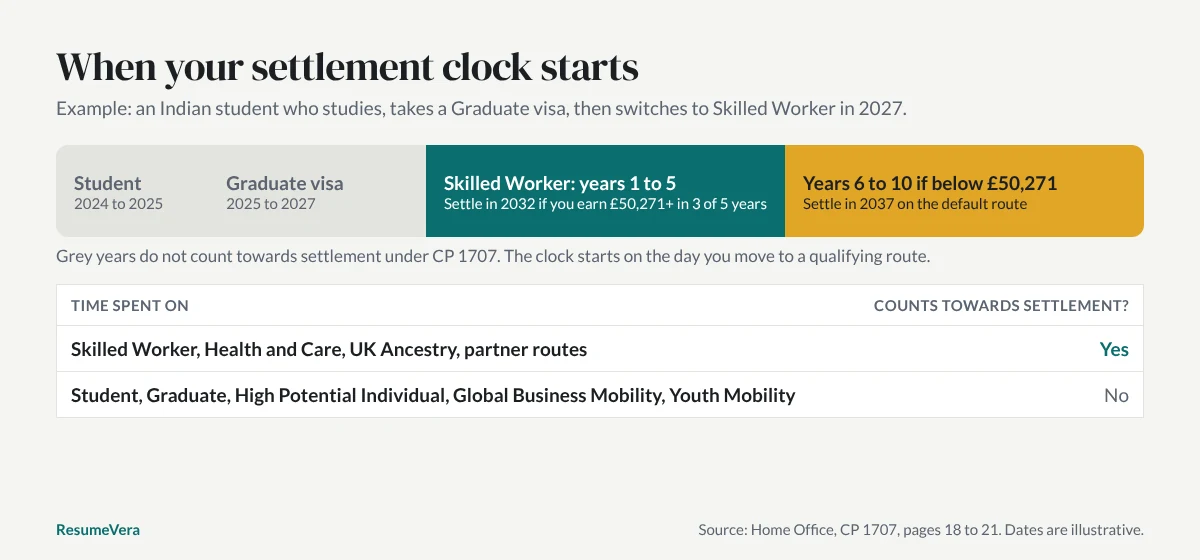
For a student, that means the clock starts on the day you switch to Skilled Worker, not the day you landed. With the Graduate visa falling to 18 months from 1 January 2027, the pressure to find a sponsored job early comes from two directions at once.
Does it apply if you are already in the UK?
Yes, in most cases. CP 1707 says applications are ordinarily decided under the rules in force on the date of the decision. The Home Secretary put it this way: settlement rules "are determined when a settlement decision is made. Not at the point when someone arrives."
There is no general protection for Skilled Workers who arrived before the May 2025 White Paper. The paper sets out narrower transitional arrangements:
- Care workers who entered or switched into the route before May 2025 keep a 5-year route if they meet a £25,000 salary requirement and the sponsorship and employment conditions.
- Public service workers in roles below degree level (RQF 6) on national pay scales who arrived before May 2025, such as nursing auxiliaries and teaching assistants, get a one-off 5-year route.
- Skilled Workers sponsored before April 2024 can keep extending their visas on current terms until 2035. That protects the visa. It does not preserve a 5-year route to settlement.
- The proposed 15-year route for roles below RQF 6 has been dropped. Those workers are on the 10-year default.
Worked examples
These apply the CP 1707 table as published. The final rules may differ, so use them to plan, not to predict a date.
- Software engineer, Skilled Worker since 2023, on £45,000 then £52,000 from 2026. If pay stays at or above £50,271 for 2026, 2027 and 2028, that is 3 of 5 years. The 5-year route is open. If pay had stayed at £45,000, it would be 10 years.
- MSc graduate, Graduate visa 2025 to 2027, Skilled Worker from 2027 on £38,000. The clock starts in 2027. On the default route, settlement is around 2037. Reach £50,271 for three of the first five Skilled Worker years and it is around 2032.
- NHS nurse on a national pay scale. Five years in an eligible public service occupation qualifies for the 5-year route whatever the salary. The list of occupations is in Annex C of CP 1707, so check your role is on it.
- Senior care worker who arrived in 2024, earning £25,000 or more. Five years under the transitional arrangement, if the sponsorship and employment conditions are met. The same worker arriving in mid-2025 is on 10 years.
- Contractor earning £130,000 in 3 of the last 4 years. Three years.
- Married to a British citizen, earning £42,000. Five years, through the British connection.
Can couples combine income?
For the baseline, yes. CP 1707 says eligible couples can combine earnings to meet a household figure of £25,142, twice the individual £12,571. Only one partner may rely on the other's income. The paper does not clearly say the same for the £50,271 or £125,141 tests, and law firms read it differently. Do not plan around combining salaries for the faster routes until the rules are published.
How many people does this affect?
The Home Office's own estimate in Annex A of CP 1707 covers people expected to reach settlement between 2026 and 2030.
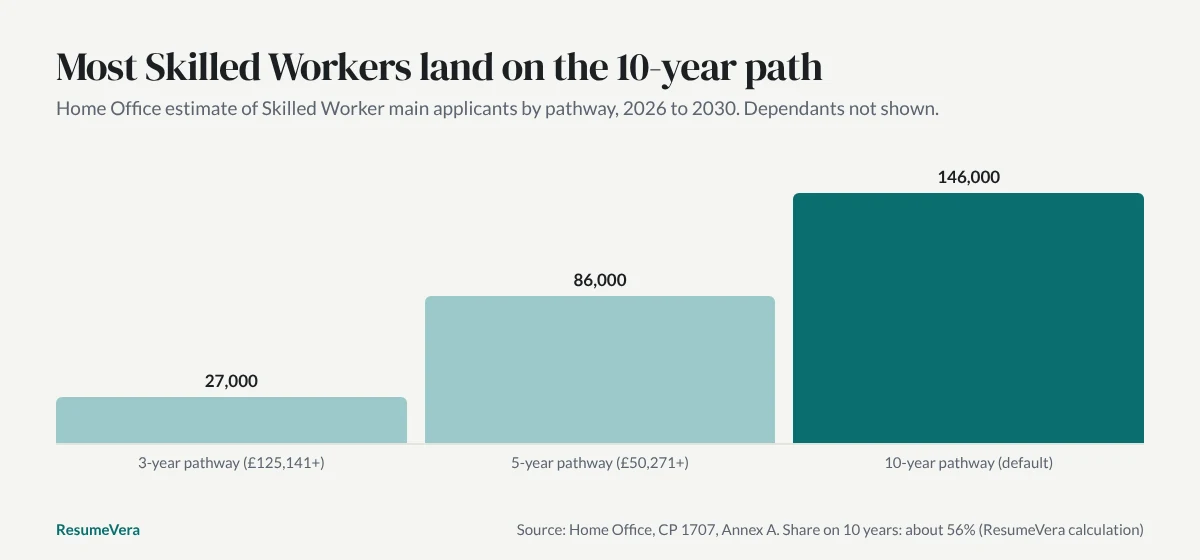
| Pathway | Skilled Workers | Their dependants |
|---|---|---|
| 3 years | 27,000 | 17,000 |
| 5 years | 86,000 | 52,000 |
| 10 years | 146,000 | 85,000 |
By our calculation, about 56% of the Skilled Workers in that estimate (146,000 of 259,000) land on the 10-year path. Across all routes, the paper's central estimate is that 1.9 million people would have settled in 2026 to 2030 without the reforms, falling to 1.4 million with them, because more than 500,000 people settle later.
What to do now
- If you already qualify under today's 5-year rules, do not sit on it. Because decisions are made under the rules in force on the decision date, waiting only adds risk. Check the current eligibility and timing on GOV.UK before you apply.
- Work out which side of £50,271 you are on. Pull your P60s for the last five tax years and count how many clear the line. If you are within a few thousand pounds, that gap is now worth years. Our UK take-home pay calculator shows what a given salary means each month.
- Treat your next pay review as a settlement decision. A move from £48,000 to £51,000 can take 5 years off your wait if you hold it for 3 years. Say that plainly to your employer, or look for a role that pays it.
- If you are on a Graduate visa, switch sooner. Every month on the Graduate route is a month that does not count. Search employers on the UK visa sponsor checker before you apply, so you only spend time on those that can sponsor.
- Fix the CV before the job search. A UK-format CV aimed at sponsored roles gets you to interviews faster. Start with the UK CV format guide and how to write a CV for a Skilled Worker visa job.
- Book B2 English and the Life in the UK test early if you have not passed them. Both are mandatory on every pathway.
- Do not pay for "beat the deadline" services. There is no published deadline to beat yet.
Going for a role above £50,271? The resume checker is free and gives you an AI estimate of how your CV reads against a job description, with specific fixes. It is not a test by a real applicant tracking system and it cannot promise interviews, but it will show you what is missing.
Six things people are getting wrong
- "The 10-year rule is already law." It is a confirmed policy. The Immigration Rules have not yet been changed.
- "I arrived before May 2025, so I keep 5 years." Only care workers and some public service roles below RQF 6 have that protection.
- "My Student and Graduate years count towards the 10." Under CP 1707 they do not, and the Long Residence route is closing.
- "£41,700 is enough for 5 years." That is the visa threshold. The 5-year settlement test is £50,271.
- "Low-skilled roles wait 15 years." That proposal was dropped. They are on 10.
- "It affects people who already have ILR." It does not. This is about qualifying for settlement, not keeping it.
What happens next
- First Statement of Changes: when the Home Office lays rules, we will add the legal start date and any differences from CP 1707.
- 1 February 2027: care workers whose sponsor loses its licence get 120 days to find a new job offer and a further 60 days to resolve their status.
- Migration Advisory Committee review: this will decide who is in the High Talent Group for the 3-year route.
- Home Office guidance: CP 1707 promises more detail before implementation, including for bereaved partners and vulnerable children.
This is general information, not legal advice. CP 1707 is a policy paper and details can change when the rules are laid. Before you make a decision about a settlement application, speak to an OISC-regulated immigration adviser or a solicitor, and check the current requirements on GOV.UK.
Sources
Written and checked by ResumeVera Editorial Team. How we research and review
Questions
Frequently asked questions
Get free ATS tips every week
Actionable resume and ATS tips, when we publish them. No spam. Unsubscribe any time.
Related Articles
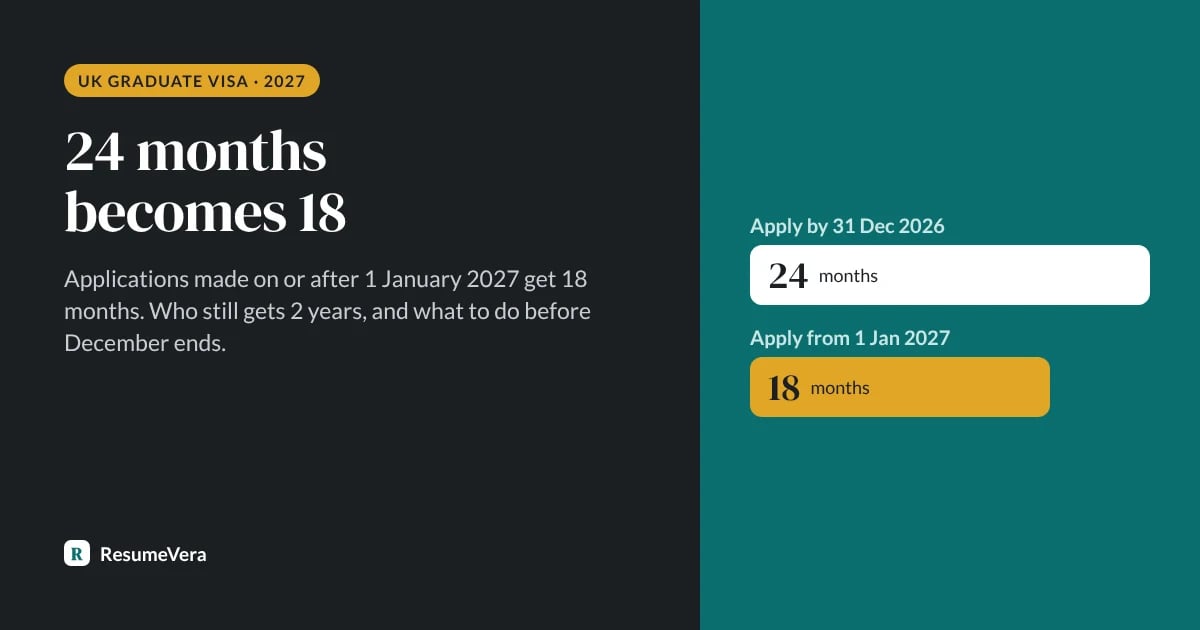
UK Graduate visa cut to 18 months from 1 January 2027: apply by 31 December for 2 years
The UK Graduate visa drops to 18 months for applications made on or after 1 January 2027. Here is who still gets two or three years, a decision table for the December deadline, what the Budget 2026 promise does and does not change, and a 90-day plan for your Skilled Worker job search.
Read More
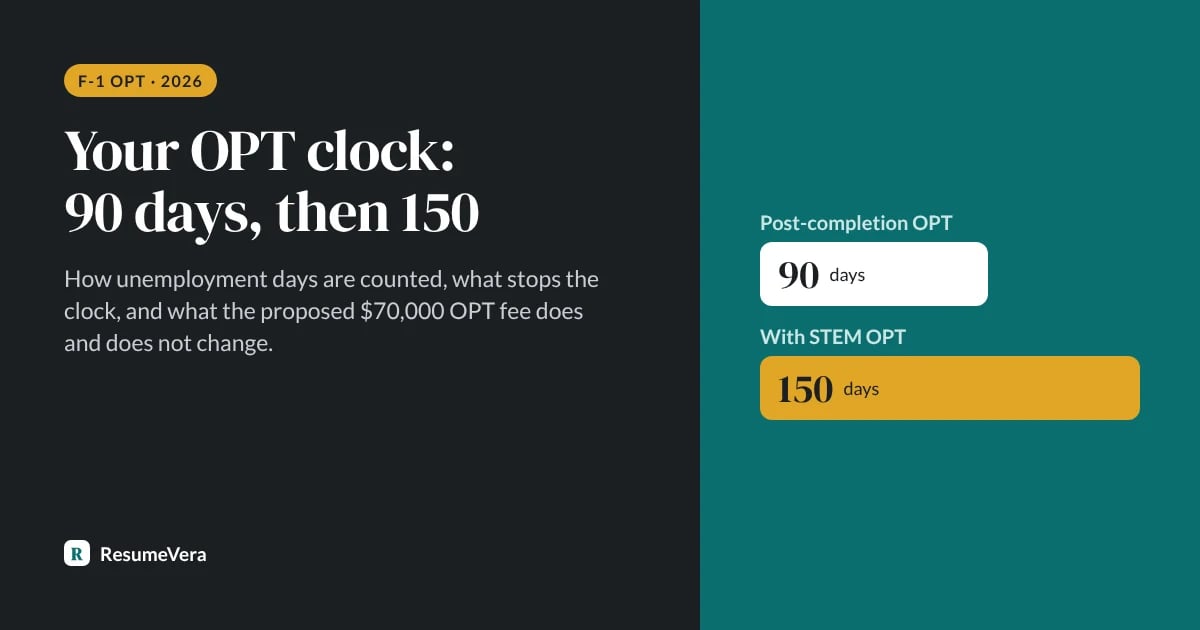
OPT unemployment days in 2026: the 90 and 150-day limits and the proposed $70,000 fee
Post-completion OPT allows 90 days of unemployment in total; STEM OPT raises that to 150, including any of the 90 you have left. Here is how the days are counted, what work stops the clock, worked examples, a 30-day job-search sprint, and where the proposed $70,000 OPT fee stands.
Read More
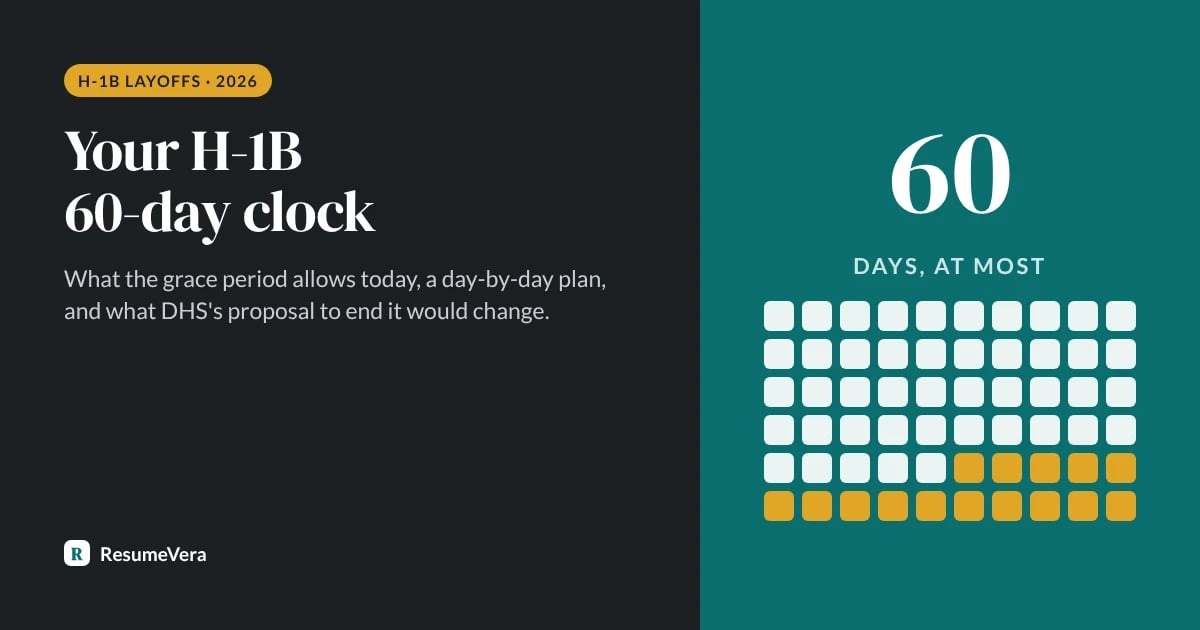
Laid off on an H-1B in 2026: your 60-day grace period and DHS's plan to end it
Laid off on an H-1B? You can generally stay up to 60 days, or until your I-94 ends if sooner, to transfer, change status or leave. DHS proposed ending the grace period on 11 September 2026, but it is not in force. Here is a day-by-day plan with worked date examples.
Read More
Try it
Check this against your own resume
The post above is general. Your file is not. The checker reads it the way a parser would and tells you which of these points it actually breaks.
Check your resume free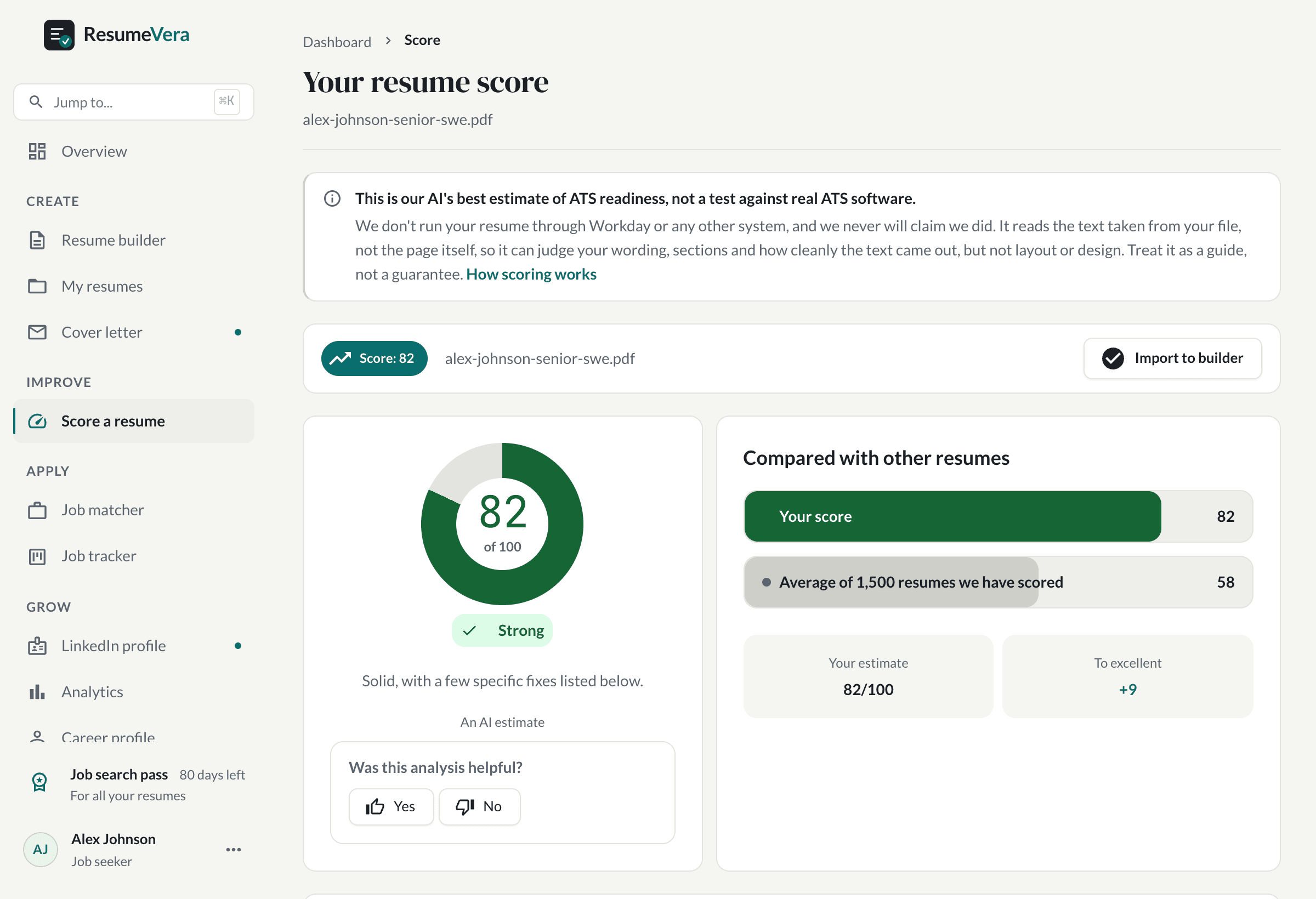
The real score page, with a sample resume and sample scores.
Now check it against your own resume
An honest resume score in seconds. No account, no card.